Showing posts with label Inspirational Art. Show all posts

Wednesday, August 1, 2012

Inspirational Art: Luis Royo


This painting is by Luis Royo and was used as the cover for A Yoke of Magic by Robert Vardeman (which I'm currently reading).

A few quick descriptions from the novel of the riders and their mounts:

The three riders reined in and held their snorting mounts just beyond the ring of pale light cast by Lejena's campfire. Their horses pawed the earth, searing the ground wherever they touched; their hooves were afire.

As she neared, the foremost of the demon riders grasped a longsword forged from crystalline flame. It blazed brilliantly as it slid form a dark scabbard, tiny tongues of fire leaping and dancing along its entire length.

In the light of those hell-fired swords, Davin saw the heavy cowls pulled forward about their heads. No matter which way they turned, their faces - if they had any - remained cloaked in shadow. But the hands gripping those flaming blades were skeletal!

Between the images and the description all I can think is light-sabre wielding Nazgûl.

Tuesday, July 31, 2012

Random Campaign Idea in Pictures

So, lately I've been listening to this:
Which lead to me reading, for the first time, this:
While thinking about running:
Yet at the same time I'd like to run:
Where this:
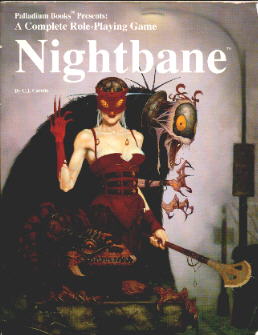
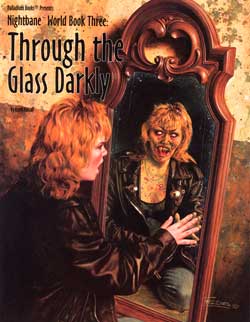
Has always been associated with:
And I'm really excited to get this soon:

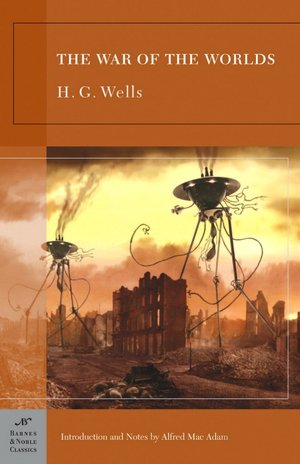
Now, post holocaust after the Martians is nothing new. The Aftermath rules suggest it and a later return of the Martians was the ruin for one of their playtest games (even including the human hunters of men the artillery man envisions). Still, the idea of a devastating Martian war where humanity, but not civilization, is saved by monsters and magicians could be fun.

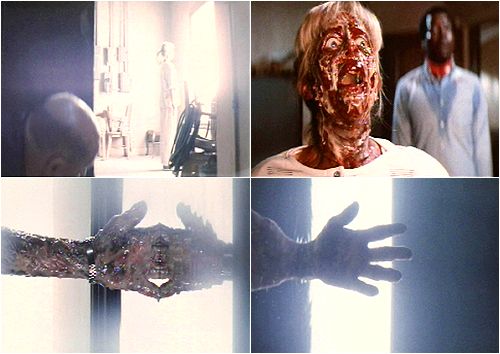
Base on The World After and this, among others, it's clear I've internalized the D&D is the apocalypse trope. It's also clear that I prefer it not be nuclear war and have a strong bent on the Devil did it (the multiple images above, for those who don't recognize them, are from Prince of Darkness).


Thursday, March 17, 2011

Inspirational Art: Hot Elf Chicks

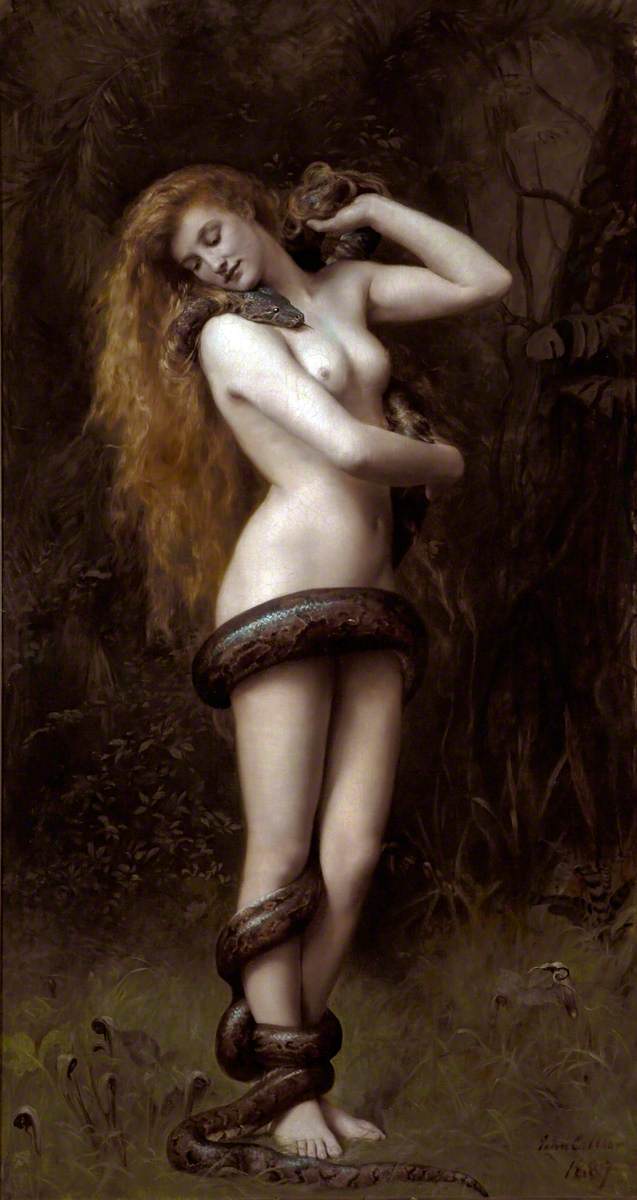
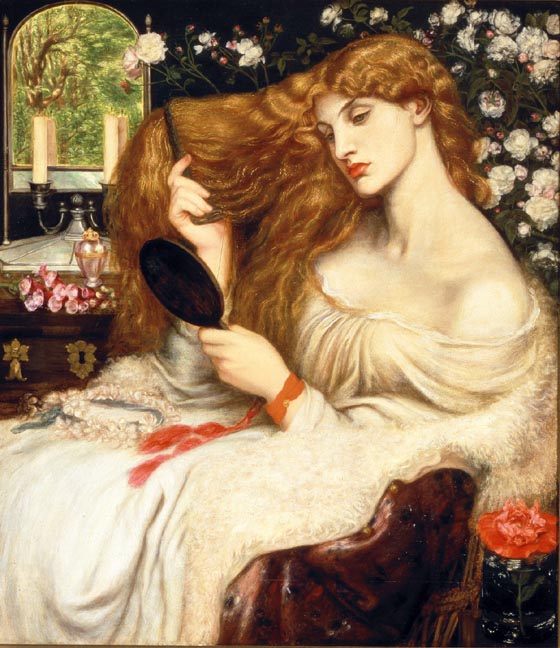
For those getting the joke, yeah I'm late. I took a couple of weeks break from the D&D blogs. But, I figured I could still present various pictures of the Hot Elf Chick of all Hot Elf Chicks of The World After, Lilith, Mother of Elves.

For those of you going, "Hey, I goggled 'hot elf chicks' looking for some inspirational material and I'm getting stuff about some lame D&D world using artsy pictures, WTF?" let me explain.

This blog is connected to a large community of DIY oriented players of D&D and other roleplaying games. We are using a common bait and switch tactic: seeding terms we know people are searching to get people to visit our blogs who usually wouldn't. We figure some of you either played games like D&D in the past but drifted away or might enjoy playing them with us


First up we have John Collier's Lilith, which graced the post linked above. It is my favorite Lilith (obviously I would think) and one I consider highly erotic. You might not consider it "hot" in the primitive boner creating sense that seems to be the limit of 21st century male thinking on the Internet but I encourage you to move beyond that and imagine the sensual and sexual avenues this woman would open to you.


Next up is Dante Gabriel Rossetti who had a habit of painting the same woman from the same model (yet who looked nothing like the model). His Lilith is colder and more reserved than Collier's Lilith. Given in The World After elves are the children of primal chaos the abandon and destructive sensuality of Collier is a much better match than the ice queen of Rossetti.


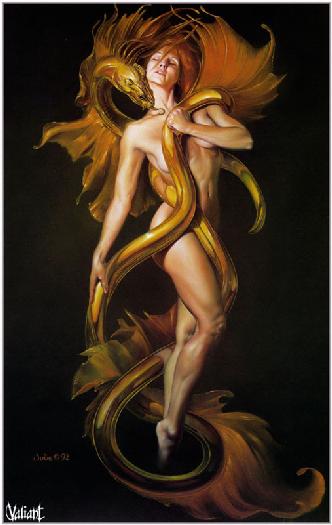
Next we have some more modern Lilith images. The first incorporates direct dragonic features into Lilith herself while the second maintains the serpent entwining nature we see in Collier.


Finally, we'll finish with Vallejo's Lilith.

One thing this post has got me wondering, I choose Lilith as the Mother of Elves for the World After without considering the strong draconic/serpent imagery. That said, the Marvel Weird World materials which inspired the elves without memory show one elf born fully adult from an egg in the skeleton of a dead serpent. Perhaps there is a strong connection there.

Finally, some links to learn more about the OSR:

THE Place to go to learn about the history and ethos of early D&D is Grognardia.

If you lost those old D&D books there are a variety of clones: Basic Fantasy Roleplaying, Labyrinth Lord, Swords & Wizardry, and OSRIC.

My favorite producer of new material is Lamentations of the Flame Princes who also produce their own D&D clone which is my rule set of choice.

Finally, if you want hot chicks and D&D how can you beat Playing D&D with Porn Stars.

If that's got you interested, check the blog roll and the Old School RPG Magazine and Fanzine page for more.

Wednesday, February 23, 2011

Inspiration Art: A Link

Today I'm mostly posting a link for inspirational art because work has been busy. However, the art in question does have me thinking about OSR and what my old school gaming memories are. I'd like to say it will inspire a post but we know how good I am with follow-through.

Wanted, Classic 70s Sci-Fi Posters

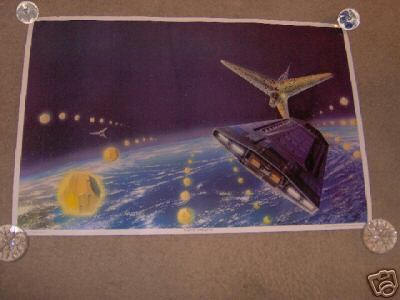
However, I am going to post one of his images:


This image, more than any other on the page, screams out what science fiction and fantasy were about for me at the time I discovered D&D. They weren't really separate and were mixed up with Yes and similar album covers, the kind of shows discussed at Space: 1970 (which is what pointed me to the poster site). It's the same frision I still get from Palladium Books stuff and listening to Nightwish. It's something I often try to capture. In fact The World After has huge dollops of it and part of the problems that campaign world has is trying to synthesize that with more serious elements.

Monday, February 14, 2011

Monday Pointers: The I hate V-day Edition

D4:Sure, they had Chariots but did they have magic items
Over at Grognardia James M. makes an interesting, but justifiable, addition to his Pulp Fantasy Library: Chariots of the Gods. For those of you who aren't survivors of the 70s this is the iconic "space aliens built the pyramids" book. It's not the most interesting (I reserve that for The Sirius Mystery: New Scientific Evidence of Alien Contact 5,000 Years Ago) but it is the iconic tome. If you want some science fantasy weirdness or an alternate conspiracy for your Mulder and Scully to run into it's a great choice.
D6:Herb's Horrendous Hiccups
Want a free copy of the next edition of Lamentations of the Flame Princess Weird Fantasy RPG? Well, come up with a prizing winning level one magic user spell. Even if you don't come up with the winning entry you'll have helped create a great resource of first level spells available under the OGL.

D8:My Memory, it is strange
Of course, the first ancient aliens appearance in the OSR to my memory was the heavy influence of Richard S. Shaver's tales of underground mind controlling dero had on Scott's World of Thool. Although the brilliant and very odd Thool is gone for a large part you can still find Shaver's works online.

It's been a short list today, but I've been busy. For those wondering where this weekend's posts went, I screwed up and posted notes for upcoming entries, but starting this week Inspirational Art will start alternating with Inspired Creations which will draw on prior iterations of Inspirational Art for actual things I'm trying to use in game.

Speaking of in game, I'm looking to start an alternate Sunday evenings campaign set in The World After. Long term I'd like to start a third campaign as well for the alternate days featuring the latest ideas for A Demon Haunted World.

Finally, I hope to get a summary of the first four sessions of Crusade Beyond the Door up this week, hopefully followed by tomorrow's fifth session.

Wednesday, February 9, 2011

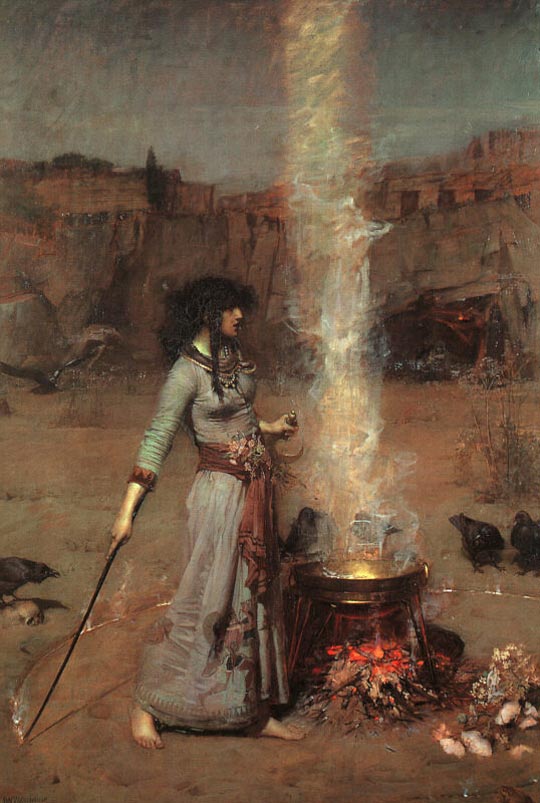
Inspirational Art: The Magic Circle by Waterhouse


This is John Williams' second appearance in Inspirational Art. Given my love of Pre-Raphealite painting and background in the SCA this shouldn't be a surprise.

The Magic Cirlce is a particularly interesting painting for RPG inspiration. Well into the 80s our image of what the middle ages, and thus much of fantasy, drew heavily on Pre-Raphaelite imagery. This particular painting, given the simplicity of the subject, emphasizes several of them. He gown, a simple form with a pale but not pastel color, mid-forearmed sleeves, wide facing on the collar and cuffs, is a classic fantasy image. The multiple winds of the belt with the dangling front is classic although Waterhouse paints more of a sash here (perhaps an influence from India parsed through the Victorian eye). The cauldron directly on the fire is another image well known.

While all are good for a GM's use in describing an NPC I'd like to draw particular attention to her implement. The rod, which she appears to be using to inscribe a circle, is neither the staff or dagger, the traditional magic implements in fantasy literature. While D&D has many rods I rarely see them used and almost never see the rod as a standard magician implement in adventures or books. The inclusion of the cauldron inside the circle is also unique compared to more modern fantasy art, writing, and games.

Do these differences represent her specialization or a quirk of personality? Does she wear a sash belt instead of a leather for a reason? What is she brewing that requires it to be protected from the outer world during its enchantment? Why does she use a rod and is it metal, wood, or some other material? What is the decoration on her skirt?

Finally, this image is used at Wikiquotes to illustrate a quote from Good Omens:

Precisely because she was a witch, and therefore sensible, she put little faith in protective amulets and spells; she saved it all for a foot-long bread knife which she kept in her belt.

I see inspiration for an encounter, an interesting NPC, or even an order of magic. Regardless of which you choose, Waterhouse has provided some excellent inspiration.

Wednesday, January 26, 2011

Inspirational Art: The Mechanical Turk

One of the most interesting but least used (in my experience at least) types of monsters is the automaton. Mechanical constructs have a long real world history and, if not quite as magical as their creators would have liked the certainly captured the public's imagination.
Among the most famous automatons is the Mechanical Turk. Build by Wolfgang von Kempelen to entertain the Austrian Empress Maria Theresa in the second half of the 18th century. It would defeat a variety of opponents including Napoleon and Benjamin Franklin. It was only after 50 years that it was show to be a fraud in 1820. The elaborate desk that held its table had a concealed human operator within. It was captivating enough that it would continue to be shown up until its accidental destruction by fire in 1854. It's owner at that time was Dr. John Kearsley Mitchell. Among Dr. Mitchell's other claims to fame he was Edgar Allen Poe's personal physician.

It was succeeded at least two more machines, Ajeeb and Mephisto. The later was remote controlled instead of having an operator. A true automaton capable of playing chess on its own would not appear until 1912 with El Ajedrecista. Even then, it was limited to three piece end game of its own king and rook against a human king.

The Turk, or, better yet, a truly self-actuated version powered by magic, would be a great addition to a campaign. A court magician could have created one for his king's entertainment. From there plots from the Turk as evil adviser, rival of its creator, or test of potential advisers or employees only scratch the surface. I can see two uses of the Turk in a dungeon. He could be an encounter of his own, perhaps a trap of some kind or a way to gain information. He could also constitute an item of treasure. I find this later idea deliciously old school in the ingenuity players would need to see it as treasure, retrieve it, and find a way to make us of it in the outside world as well the interested parties the later would create. These traits are increased if your campaign eschews the traditional medieval setting for something slightly more modern as LotFP is moving towards (perhaps it could be the key focus of high level players' inn) or my own World After.

Wednesday, January 5, 2011

Inspirational Art: A Random Snippet from Wikipedia

Okay, so I'm getting far afield from art, but the name has been around for the Wednesday inspirations post and we'll keep it.

It has been said that had Byron lived and gone on to defeat the Ottomans, he might have been declared King of Greece. However, this is unlikely. Unlikely, perhaps, but a great jumping off point for a campaign in the 1830s in Eastern Europe, which was recently noted is a good, untapped time (and would match LotFP well).

Wednesday, October 20, 2010

Artistic Inspiration: Nemo/The Cave

In searching for an inspiration to post about today I was amazed I haven't posted this music video yet.


In the player handout first campaign in the World After I said:

A random selection of inspirations for the game: The novels Black Easter and The Day After Judgement> by James Blish (a few years ago available as The Devil's Day in a single volume). The Nightwish album Once and the Within Temptation album Mother Earth. Memories of many Tunnels and Trolls sessions in the early 80s. Three on-going urban fantasy book series one of which is Carrie Vaughn's Kitty novels and the others would be telling. Ken Hite's GURPS Cabal and many columns from Supressed Transmission. The movies Heavy Metal and The Warriors of the Apocalypse (oh, and a tiny touch of Night of the Comet...well, not really but if you're renting bad movies to get ready for the game it's a classic). The various Horseclans books. The full range of D&D (not AD&D, which 3rd and 4th edition continue without the A), Judges Guild, Arduin Grimoire, and modern simulacrum games designed to fit the 80s vibe. Dragonfoot.org, The World of Thool (and it's predecessor Wilderlands of OD&D), Grognardia, Lair of the Flame Princes, Monsters & Manuals, Philotomy's OD&D Musings, The Society of Torch, Pole, and Rope, and RPG.net.

While some of those have fallen by the side others have remained constant. The Blish books have clearly remained as does one of the urban fantasy series, The Dresden Files. Ken Hite's work is seminal in making my interests gel and are included. Most of the others have not.

However, this video is very specifically what I was referring to about Nightwish. This isn't the official video but includes scenes from the movie The Cave. I've never seen the movie but the video influenced my initial ideas for a mega-dungeon. I later abandoned them but they have come back full bore for Santuario Nero. The idea of a hidden complex with monsters sealed over by an abandoned monastery fits the World After very well.

Wednesday, October 6, 2010

Inspirational Art: The Harrowing of Hell

About five weeks late the next round of inspirational items for the World After and the one that drew a content warning.


As I have pointed out in the past, the changes between The World Before and The World After are inspired by the novels Black Easter and The Day After Judgment by James Blish (available in a omnibus called The Devil's Day). The books use a good deal of medieval imagery and seem to draw heavily on both Dante and Milton (especially the second).
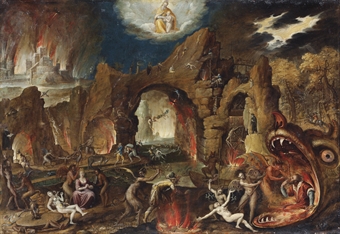
The final chapter of the second book is called "The Harrowing of Heaven" as a parallel to The Harrowing of Hell. The Apostles' Creed mentions Christ's decent into Hell for the three days prior to the resurrection. Depending on the source (religious or literary) this may have released souls dead before Christ, but the interesting part to me is from Dante. In The Inferno Virgil tells Dante of the Harrowing and shows him damage to the structures of Hell, specifically the destruction of the bridges that connect that span the ditches where the sinful are punished in the Eighth Circle of Hell.

It is from these two sources I drew my inspiration for The Harrowing or more properly The Harrowing of Creation. One of the simplest but to me very interesting thing is the destruction of bridges: literal in Dante and metaphorically in Blish. One has a harder time traversing Hell or contacting the creator. Now, 23 times 25 years after the Harrowing the world is still assorted city states, vast and very hard to traverse wastes separate people from each other, much that was known was lost, and fewer and fewer people can touch the divine. The Harrowing of Creation seems to have destroyed travel and communication. This includes the communication of knowledge...no one knows where the elves came from and even the Hierarchy, which predates The Harrowing knows few details of it.

The question is how to translate this to my game. The first thing, and easiest, is lack of roads and other structures of travel. The more complex some travel structure, the more creative effort required to built it, the less likely it is to exist and the more vulnerable it is to entropy. Reading and writing have fallen to medieval European levels in most places. Spells of travel and communication are rarer and perhaps of higher level.

Finally, the way around this transport problem is The Demon Ways that connect the parts of the megadungeon. People just need to remember demons aren't among The Fallen.


Art notes: the two illustrations of The Harrowing of Hell are by Pieter Huys and Jacob Isaacsz. van Swanenburg.

Wednesday, July 21, 2010

Inspirational Art: John Martin's Pandemonium

Given the topic of recent posts looking to art concerning Hell for inspiration seems natural. This painting, however, has a second advantage in it is the first subject of this series where I have seen the original in person. John Martin was an English romantic painter of the first half of the 19th century. His paintings, not surprisingly, deal mostly with mythic and Biblical subjects.

Pandemonium is Milton's Palace of Hell in Paradise Lost. In my first inspirational book for City States of the Apocalypse Blish follows Dante's vision of Hell. In fact, the city of Dis is called forth into the world in part of the novel. I would like to bring that idea forward to the CSotA but perhaps not with Dante.

Looking at this painting we get great ideas for the trapping of devils in the setting. The hosts of Hell look more Greek than Medieval. Perhaps the ceremonial wear of those who follow the Devil would be not that of a friar or priest, but a hoplite. Given the Fallen are fallen angels can we use their imagery for powers of light of well and how their followers, at least those in the field and outside of monasteries, should appear. I would remind readers that modern Catholic ecclesiastical garb is inspired by that of Roman courtiers, a by-product of the Church's place in the late empire.

Paladins as hoplites instead of knights. I think I'll run with that.

Wednesday, May 19, 2010

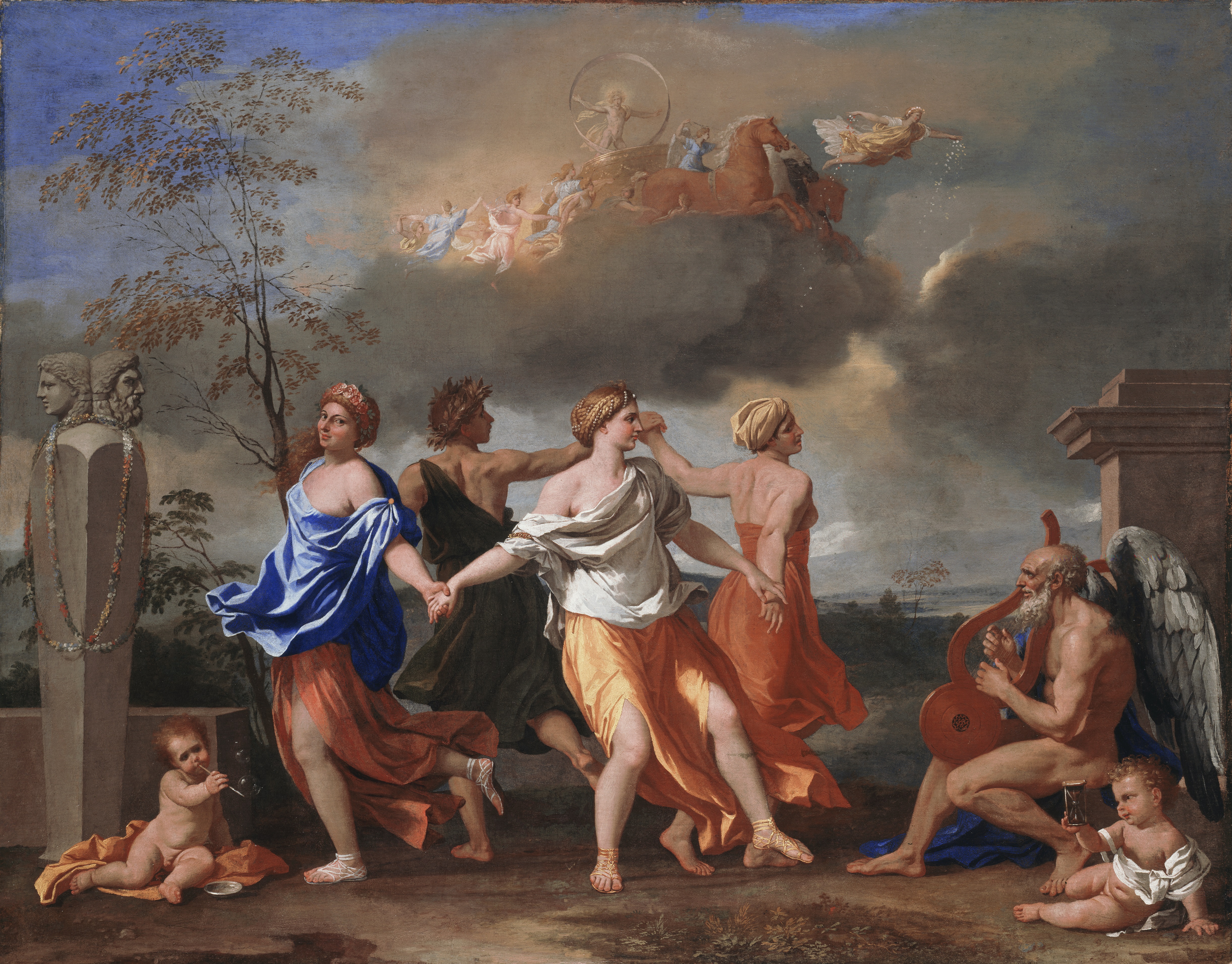
Inspirational Art: Nicolas Poussin's The Dance to the Music of Time


While nothing I can come up with is likely to match Anthony Powell's series of novels I think gamers can draw inspiration from Poussin's painting.

At the center the four seasons dance in a circle, while facing outwards, to the music played by an angelic, but aged, time (who may be flanked by his successor) while a heavenly host rides across the sky. That host might be the sun, but also could be ceding rain.

I think this could be an interesting encounter in a Heroquest game or epic level D&D (Masters BECMI, Epic 3.x, or Epic level 4th). Do the characters need the seasons to succor them? Does disturbing their dance affect the world? Perhaps they are just an encounter en rote to the chariot in the sky?

Regardless, Poussin's painting, along with many classic styles (and related school) provide an alternate set of imagery to stock D&D today. I love the metal imagery circa 1980 of D&D, the OSR styles of Otis, and the 80s/90s Elmore styles. I'm not a fan of dungeon punk. Still, a large part of my heart is in Pre-Raphelite, Art Nouveau, classical, and early 20th century book illustrations (as someone following Inspirational Art posts would see).

I think we're missing a visual language that influenced several of the masters (Dunsany, for example) or was created by them (William Morris). If the OSR is to move in new directions instead of repeating the past, perhaps this should be one.

Wednesday, March 3, 2010

Inspirational Art: Ken Kelly

Ken Kelly is our inspirational artist this week to continue on from Silver Age Appendix N: Coming of the Horseclans. The image to the left is the cover of the Signet edition of the book and I find notable for one big reason. I want you to look at the woman to the left (I believe that is Mara). How is she different from most fantasy swords women?


Kelly is known for, at least somewhat, for female warriors who aren't members of "you have to be kidding me" armor club. The woman at the right, in fact, made a splash at RPG.net in a threat about women in fantasy art who were actual threats.


That said, Kelly has done plenty of traditional women. In addition to the Horseclans series at Signet he did Gor covers for the DAW editions of the Gor books. He has also done classic chainmail bikini covers of Red Sonja, among other. Outside of books, he has done album covers for Kiss (in his own words his biggest break), Man-O-War, and Rainbow. Finally, he has done some RPG Art as you can see at the left.

Wednesday, February 17, 2010

Inspirational Art: A Child's Book of Warriors pt. 1


One of my favorite things to have happen while preparing this series of posts is to be surprised. Having done a lot of modern art and planning to do more this week I got a surprise in my inbox.

Steve Poke runs a great public domain art blog and his latest post hit my email today. He presents some plates from a 1907 book A Children's Book of Warriors. Even better, he provides a pdf of it.


If you like sea battles between Vikings with horns (or wings in this case) on their helmets our first image today is a grand choice for inspiration. Add in the Christian overtones (see the caption) and I see a great battle. Even better, write an adventure or area using this picture's imagery with the story and settings of Sinbad and the Eye of the Tiger (one of the great D&D movies of all time) and you've got a winner. Though not quite as inspiring the black and white sea battle is also interesting.

I really recommend heading over to Steve's site and grabbing the entire book. It'll be the subject of next week's Inspirational Art post as well. I think children's fantasy from the late Victorian and Edwardian eras is a great untapped source of inspiration for D&D and other games.

Wednesday, February 10, 2010

Inspirational Art: Richard Hescox

This week's artist is Richard Hescox. The image to the left (source) is an illustration from Towers of Darkover. Like our last Richard this image features flying people. Blame it on having been a huge Runequest and through it mythology as much as fantasy literature fan back in the day. There is something about grand heroes who can, among other things, fly that really puts me in the fantasy mindset. I realize that goes against much of the grain of the OSR and early D&D by being destined to greatness. However, aspiring to it and being destined are not the same thing. I think a game where we encourage our players to aim at being flying women women who control grand psychic technology is very different from insuring they are. There is a heroic game in D&D as well


Our second image from Mr. Hescox (source) I think is more directly inspirational to OSR game masters. Is she a witch calling forth water the drowned, a sorcerer summing water spirits, a wizard animating water, or an alien like those seen in The Abyss. Actually, with the interest in science fantasy using this painting to inspiring the use of those creatures might not be beyond the pale, although they make me think Mutant Future more than D&D.

Wednesday, January 13, 2010

Inspirational Art: Frank Frazetta In Pharao's Tomb


If I didn't already know the title I'd have sworn this is an illustration from any sword and sorcery tale. A dark haired warrior looking up steps at shadowed men of ill-intent. Clutching him is a beautiful woman in harem like dress. The shadowed figures appear to be wearing hangman's hoods and bear a vicious looking sword and axe. Aside the warrior is a priest or perhaps a mage brandishing a relic of some kind.

There are a few hints this isn't a strictly fantasy story. The warrior, although wearing a scale armor shirt, is armed with a pistol and no sword. His priest companion has what looks like a US Air Force star on his chest. While that eliminates Conan it could easily from a John Carter novel or one of the many successors to that valiant Virginian.

In fact, this is one of the famed pieces of concept art Frazetta did for the original Battlestar Galatica. I think it's a grand illustration of how in the seventies as our hobby was being born and I was discovering both it and science fiction how little artificial divisions had taken over fantastic stories.

As many people have pointed out a common trend in the OSR is science fantasy as opposed to modern fantasy. Today, most gamers wouldn't think to use Battlestar Galatica as inspiration for D&D except in the loosest way.

Inspirational Challenge:If you are familiar with the original BSG you'll conclude this was concept art for Lost Planet of the Gods. If you know the episode or can find the video watch it with a notepad and pen. See how many elements you can borrow for your existing or planned fantasy campaign. Not just the awesome tomb but artifacts, weapons, and even monsters.

Wednesday, January 6, 2010

Inspirational Art: Richard Bober/Glorantha


Today's image is cover image painted for the never published Gloranthan supplement Dragonrise which was to be the fourth adventure in the Sartar Rising series. If that doesn't get you either wanting to run a game or wanting to explore Glorantha I'm not sure what would. If you are interest in more Gloranthan inspirational art, try thread at RPG.net

Wednesday, December 23, 2009

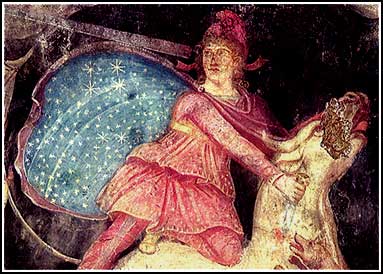
Inspirational Art: Mithras

This week's Inspirational Art is a departure. It doesn't a cover a single artist but a single subject. It is also historical more than fantastic.


Mithras was the subject of a mystery cult common in the Roman Legions during the Imperial period. Also know as "Mysteries of the Persians" it first appears in Rome in the first century AD. While the figure of Mithras carries a Persian name it is open to debate if this religion was imported from Persia or created in Rome out of bits and pieces of Persia and other lore.

The image above is called the tauroctony and was the central image of Mithratic sites. The image depicted is the ritual slaying of a bull although the meaning is open to debate (you'll see this phrase a lot in studying the Mithratic Mysteries). The interior of his cloak is lined with the cosmos and it is commonly believed that the symbolism is astrological. The image below is of the other common Mithratic iconography, the banquet. It portrays Mithras feasting with the Sun on the hide of the slaughtered bull.


Mithraism, along with the other mystery cults, offers a grand pattern for Dungeon Masters to add a unique religious element to their game. One reason we know so little of the religion is the nature of mystery cults. They have multiple levels of initiation with secrets taught at each level, not unlike some modern groups like the Masons. With Mithraism we even have the names of the levels: Corax (raven), Nymphus (bridegroom), Miles (soldier), Leo (lion), Perses (Persian), Heliodromus (sun-courier), and Pater (father).

Imagine a variant cleric class with spell lists and powers keyed to what little we know of Mithras (or some other mystery religion) using the initiation stage names as level titles and powers that evoke the name.

Wednesday, December 16, 2009

Inspirational Art: Natalia Pierandrei


This week we return to Deviant Art to find a source of inspiration. A first, however, for the Inspirational Art series is actual RPG art.


Natalia Pierandrei says At the End of the World is "Concept art I'm doing for a RPG set in Victorian Age." Certainly it's enough to make me want to check out the project, but then again I have a weakness for Steampunk/Neo-Victorian/Neo-Edwardian settings, especially the kind often seen in anime that unselfconsciously mix magic and multiple technical levels. It's probably the airship thing.


While she is at Deviant Art I'd suggest following up with Natalia at her own website, A Forgotten Night Tale. She notes she is available for freelance and specifically mentions RPGs. My friends in the OSR who find her work compelling might contact her for that next big thing you're working on.

Wednesday, December 2, 2009

Inspirational Art: Ursula Verno


I found Ursula Verno when search for artistic inspiration for my Fantasy Nouveau idea. While art nouveau elves and dragons are quite common (the former having helped me find an earlier inspirational art entry) Ms. Verno did something I found interesting: art nouveau orc women. While intriquing they weren't quite what I was looking for. However, the page had a url for site. Searching the character galleries I found today's entry for inspirational art. Her notes on the piece indicate I would love to sell prints, but somehow I lost the original file, and the jpg is all that currently remains. Too bad, as I think they'd sell.

Still, we have this great image. I see the last druid of a culture whose waste of the land has left it a desert. She sits as a guardian of a tomb not of some great leader but of her culture's heritage and the consuming soul that destroyed it.