Showing posts with label random campaign ideas. Show all posts

Tuesday, July 31, 2012

Random Campaign Idea in Pictures

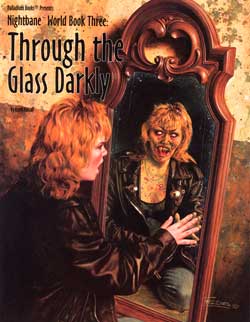
So, lately I've been listening to this:
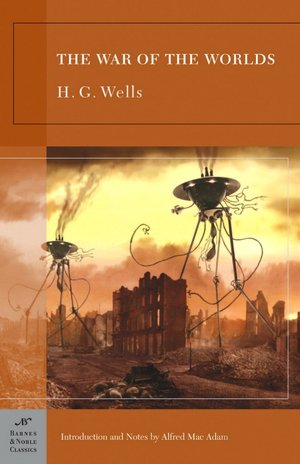
Which lead to me reading, for the first time, this:
While thinking about running:
Yet at the same time I'd like to run:
Where this:
Has always been associated with:
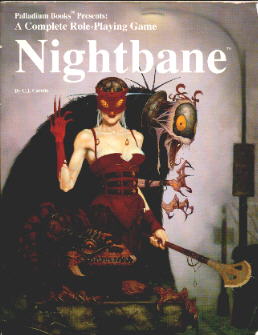
And I'm really excited to get this soon:

Now, post holocaust after the Martians is nothing new. The Aftermath rules suggest it and a later return of the Martians was the ruin for one of their playtest games (even including the human hunters of men the artillery man envisions). Still, the idea of a devastating Martian war where humanity, but not civilization, is saved by monsters and magicians could be fun.

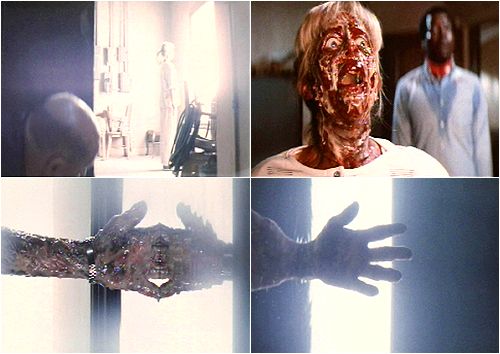
Base on The World After and this, among others, it's clear I've internalized the D&D is the apocalypse trope. It's also clear that I prefer it not be nuclear war and have a strong bent on the Devil did it (the multiple images above, for those who don't recognize them, are from Prince of Darkness).


Sunday, July 29, 2012

Playing with History

Influenced by a old Jeff Rients post and prompted because the third has been on my mind today and the second the past week (actually about a week ago, but just finishing the post) here are some pseudo-historically based campaign ideas I've had:

PeriodCampaign IdeaNotesProbable Rules
About 110,000Clark Aston Smith's Hyperborea set in Sangamonian interglacial period GreenlandWhen reading about Greenland due to reading The Tale of Satampra Zeiros I found this map and it's been the primary inspiration.Of all the ideas this is the one most likely to have me drag out AD&D and believe it or not, second edition. Second edition seems like plays much closer to what I've called Intermediate D&D which I played in the early 80s than full blown AD&D. Also, I've never really played second.
871 ADThe Viking conquest of Britain during the reign of Alfred the Great.Having long had an SCA persona who was a pre-Conquest Saxon Although for years he actually bridged the Conquest and went on the Crusades...as I spent time in I got more interested in Anglo-Saxon England. Afred's reign. Bernard Cornwell's The Saxon Stories would be the major literary influence. Lamentations of the Flame Princess for the non-advancing fighter and the very dangerous magic which would be the halmark of the invading Vikings in constrast to the clerics of the Saxons.
late 1400sThe Valley of Mexico just before the Spainish Conquest (and possibly during).This is the most recently inspired, by the pyramids episode of Out of Egypt which I watched on Netflix. I didn't realize that Teotihuacan was not of Aztec origin but in fact predates their culture. That alone sounds like an excellent megadungeon. Plus, Aztec culture, even the poor "I read Wikipedia and a overview book plus watched some TV" cultures that characterize D&D games (even ones based on the Middle Ages or Roman), is alien enough for most of the people who might play in my games to make it interesting.While part of me wants to do straight OD&D with this one I suspect Runequest of some form (I've got 2nd and 3rd edition as well as BRP and GORE on the shelves and I'm open to either Mongoose version, 6th edition, or Open Quest). More than the other three I'd like to use An Echo Resounding with this one. The Valley of Mexico is perfectly sized for it at 3816sq miles. Remember, in Pre-Columbia America there are no beasts of burdern or riding animals so distances will always be driven by foot speed.

Tuesday, August 16, 2011

Mash-up Campaign Idea

A while I wrote about trying to actually build a campaign out of this great description of D&D from Jeff Reints:

You play Conan, I play Gandalf.  We team up to fight Dracula.

Last time I tried to translate it somehow but this weekend I had an insight that lead me to want to take it literally: Gandalf doesn't have to mean Lord of the Rings.  It can just mean The Hobbit.  If you limit the influence of the Gandalf source to just that book you can have a VERY different setting.  With that revelation I think you could actually build a setting where Gandalf and Conan are actual NPCs or will be at some point.

Using Jeff's old alchemical formula to limit my fluff sources I would use:
  1. The Hobbit
  2. Conan stories are harder because the logical choice for one book would be one of the current volumes from Del Ray. The problem is they include fragments, critical commentary, and worst of all the essay The Hyborian Age.  However, Project Gutenberg Australia comes to the rescue.  Howard's stories have fallen into the public domain down under and are all available. Because we're supposed to have one book's worth let's create our own volume, Conan: The First Year, containing stories published from December 1932 to November 1933.  That gives us the first six stories.
  3. Finally, we want something that isn't obviously a fantasy book.  We still need Dracula.  For that I look into D&D's history and grab Hammer Films's Horror of Dracula. After all, Peter Cushing's van Helsing is the origin of the cleric.  An interesting alternative would be the first volume of Marvel's Tomb of Dracula (using one of the Essential or Omnibus editions).
Given I'm stealing Jeff's ideas left and right I should probably grab one in the gripping hand as well.  Taking the idea he suggested based on Oriental Adventures and that Matt showed can be done in Pars Fortuna.  Use the classic rules of D&D but not the races, classes, spells, and monsters.  While I wouldn't reject all spells, monsters, or magic items certainly new classes would go a long way towards changing the nature of the game.  If we use non-AD&D TSR D&D as our base race is class as well.

Off the top of my head (I haven't read The Hobbit this millennium) I'd having the following classes (with the iconic character they represent):
  • Hobbit burglar - Bilbo
  • Barbarian - Conan
  • Wizard - Gandalf (Wizard, not magic-user...much more closely aligned to the specific character)
  • Dwarf - Thorin Oakenshield and his band
  • Bowman - Bard the Bowman although you might generalize this to weapon master.
  • Vampire Hunter - van Helsing
  • Wood Elf - The Wood Elf King (Elf fighters with woodland abilities)
  • Sage Elf - Elrond (Elves with magical abilities more related to healing and helping to match the idea of the Last Homely House)

Tuesday, March 29, 2011

Random Campaign Idea: Roaring Heroes

Imagine a time of great change, a new and unique popular music, the emergence of organized crime in many cities in the US, a ubiquitous underworld, rebellious youth culture, lots of stories of adventure and science, and many people pushing to the limits of human ability and endurance.

Well, if you consider women voting, the emergence of jazz (specifically Dixieland), people from Joe Kennedy to Al Capone to making fortunes running rum, the speakeasy culture, The Lost Generation and flappers, the birth of Amazing Stories, much of Lovecraft's stories (the landmark Call of Cthulhu was written in 1926 and published in 1928), and things as serious as Lindbergh flight and as frivolous as pole-sitting(although it has a serious religious history).

So why not superheroes? I thing the 20s is a completely ignored period for superheroes, at least in gaming.

Potential heroes could include:

Pole Star: With the emergence of the first Polish nation in over a century the resulting surge of nationalism would inspire one young lady to become the embodiment of the Polish nation. Her powers first appeared on the battlefields of Polish-Soviet War when she blinded an entire Soviet infantry company (leading to their capture) with her "star light".

The Limmerick: An Irish veteran of the war against British known for his banter while running circles around British troops later showed how literal those circles were. This speedster was also know for his improvised vibes at his opponents.

The Stylist: A record holder during the pole sitting fad would achieve a form of enlightenment and bodily control and go on to fight crime with his mental powers and unstoppable fists.

The Drunken Brawler: The other great fist fighter of the first generation of superheroes was a college student who first learned of his alcohol fueled powers while defending his girl and several others when a gang hit went down in his favorite speakeasy.

The Mol: However, The Drunken Brawler's girlfriend needed protection the least. A champion trick shooter she would go on to join him in crime fighting in the Northeast US. Given his need for the illegal gin to fuel his abilities she actually held the more prominent position and certainly was the public face of the Flapper Duo.

I think a 1920s game would work best with a few ground rules:
  1. The nature of the heroes is probably better at a lower power level (even the original Superman was less powered than today) and with attitudes halfway between classic pulp heroes such as The Shadow and Doc Savage and the Superheroes decended from them. Domino masks and stylized street clothes should be preferred over tights.
  2. A lighter, early Silver Age style should prevail and even then a more DC "golly, gee why can't she love me instead of Green Lantern" feel than a "how will I take care of Aunt May" Marvel feel.
  3. At the same time, this is the party before we all die in the wake of WWI. Most men who are heroes are probably veterans of that war and their angst over the killing and senselessness of the war is good. Codes against killing as well as superheroics being an expression of things such as finding meaning or thrill seeking (similar to the emergence of biker gangs after WWII) are good uses of the effects of the war.
  4. The Mysterious East is a double edged sword. Yellow peril is in the air and the Insidious Dr. Fu Manchu (or a suitable clone) is almost required. At the same time characters like Larry Darrell are finding a way to deal with the war and some mysterious powers (even Darrell uses hypnotism) in the Orient.
  5. National heroes could pop up all over Europe with the changes due to the war. That same nationalism deposed many monarchs who could make great villains or national heroes depending on how you play it. Is the Kaiser a villain scheming to re-enslave Germany or the last person defending it to the world?

Tuesday, January 25, 2011

Random Campaign Idea: To Serve the Emperor

This is the third Star Wars derived random campaign idea (first and second) to appear on this blog. Yet I maintain I'm more a Star Trek guy.

"The Imperial Senate will no longer be of any concern to us. I have just received word that the Emperor has dissolved the council permanently. The last remnants of the Old Republic have been swept away."

"But that's impossible. How will the Emperor maintain control without the bureaucracy?"

"The regional governors now have direct control over their territories. Fear will keep the local systems in line."
Exchange between Governor Tarkin and General Tagge

Once secure in office he declared himself Emperor, shutting himself away from the populace. Soon he was controlled by the very assistants and boot-lickers he had appointed to high office, and the cries of the people for justice did not reach his ears.

"Having exterminated through treachery and deception the Jedi Knights, guardians of justice in the galaxy, the Imperial governors and bureaucrats prepared to institute a reign of terror among the disheartened worlds of the galaxy. Many used the imperal forces and the name of the increasingly isolated Emperor to further their own personal ambitions.
- Journal of the Whills

The first Emperor came to power by exploiting a tradition in the history of the Republic. In multiple times of crisis the Senate had elected a dictator with absolute authority for a limited period of time. However, Senator ne Magister Populi Palpatine, using those very boot-lickers he would later appoint his Lictors and eventually Regional Governors, convinced the Senate to not place the traditional fixed limit but one "for the duration". One cannot help but wonder if Palpatine was actually the power behind both sides of the Clone Wars in an effort to create an open ended crisis to justify his powers.

Regardless, by the time the Clone Wars had ended the Magister Populi had become the Emperor and, in theory, ran the galaxy as his personal fiefdom. The truth of the matter is by this point the aged Palpatine (he was a venerable 121 when first elected to the Senate and nearly 200 when he first became Magister Populi) no longer cared about the details of power but only engaged in their fruits. He considered the handful of rebellious fringe systems beyond his notice. With their victory at Corrin and rising support in the Senate he became tired of the buzzing of malcontents and, dissolving the Senate, sequestered himself in his splendor and turned over the galaxy to his former associates, the Regional Governors.

Still, some retain hope. The Jedi Knight Obi-wan Kenobi, who had both served on Palapine's staff, believed the Emperor, who's initial move to become dictator was driven by a desire to restore the Republic, could be reached. They believed his mind had been poisoned by certain of the Governors (Tarkin chief among them) and by Obi-wan's student, Darth Vader, who had betrayed the Jedi to the Sith. He noted Palapine began to change when Vader replaced Anikan Skywalker as his staff Jedi upon Skywalker's death. This was cemented when Obi-wan learned that Vader had been behind Skywalker's death.

Now, the handful of Jedi, mostly semi-trained students, have rallied to Skywalker's son Luke in the hopes of defeating the illegitimate governors in the name of the Emperor. They believe that should they secure enough of the galaxy they can regain the Emperor's ear and draw out his original intent to restore the Republic.


This is another "limit the canon" idea. Specifically, this one only requires Star Wars itself and its novelization. It does, however, leave space for the early Marvel comics, Brian Daley novels, and similar material.

I believe this one is well adapted to Traveller or Stars without Number. Each governor could rule over one subsector map and the empire might be as small as a Traveller sector. The psionic assumptions of SWN in particular, lost disciplines with what is known trained by a handful psychics themselves feeling out the powers of the past, match these semi-trained Jedi trying to restore a lost order.

Wednesday, December 22, 2010

Random Campaign Idea: Potion Miscibility

This is a little different than most Random Campaign Ideas. Instead of a fleshed out idea it's more framework for creating your own.

Two frameworks already presented in blogs that I know of are Jeff Reint's Alchemical Formula and Scott's interesting thought experiment. Lacking the creativity of either gentleman I present my mix of the two. I hope you find my miscibility roll to be a good one.

You get three pairs of game items and three pairs of inspirations and all campaign material must derive from them and you and your player's imagination. However you only start with one pair, add one when your first PC reaches 3rd level, and then add one when your first PC reaches 14th level. This brings together the limited palette of both ideas and casts it in terms of the B/X tree Scott used.

What are those pairs:

Level 1 Gaming: Moldvay Basic and any single B module published by TSR (except B1-9 combined). It could also work if you opened it to "any TSR, JG, or Mayfair module for levels 1-3" or but limiting to TSR B series is "purer". You could even open it up to modern OSR modules if you like. The key idea is pick one thing in the 32-64 page range.

Level 1 Inspiration: Any one single book from Moldvay's list and any single movie or three episodes of a TV series.

Level 1 Reasoning: Instead of a pure Moldavy boxed set I allow for a roll your own with limits. Like Scott I think B2 is a bit too straight jacket if part of your required inspiration. I know in the review in White Dwarf the reviewer of Palace of the Silver Princess recommended it replace B2. Also, for many of us B2 is something we've used a lot. While I'm a big fan of writing sources of inspiration for roleplaying being able to show your players a movie and say "like this" can help get them up to speed.


Level 3 Gaming: Cook Expert and any single X module published by TSR or B10, Night's Dark Terror (which was designed as a transitional module). As with Level 1, opening it up to any single module for levels 4-14 from any source would work if a little less pure.

Level 3 Inspiration: Any one single book from Moldvay's list and any single non-fantasy novel or year of one comic book.

Level 3 Reasoning: As with the "roll your own Basic Set" I like to let those of us who have used X1 a bit too much although I don't find it as restrictive as B2. The move to a written medium for inspiration two here is an attempt to get something different: a detective novel, ancient astronaut book, or a Jack Kirby comic is to add some spice to the fantasy staples already in place.


Level 14 Gaming: The new B/X Companion and any single rpg supplement of any kind no longer than 64 pages letter/A4 (scale for other sizes).

Level 14 Inspiration: Any one single book from Moldvay's list and any single source including modern fantasy novels.

Level 14 Reasoning: The Companion finishes the rules set while the second book gives me Jeff's "third book" of RPG material. The ability to pick any game book, not limited to a module, and the option to pick any text as the sixth non-gaming inspiration reflects the advanced age of the campaign. At this point, your world should have it's voice and adding something very open or heavy won't disrupt it much.

One suggestion if you do decide to use this formula: pick your pairs as you get them...don't pre-decide. Let where the campaign has gone decide what you're going to add to the journey. Preconceived notions of what is coming at level three are liable to sink you.

For full disclosure if I was to start doing this tomorrow I'd add the following to my Moldvay Basic:

1. B7 Rahasia
2. The Voyage of the Dawn Treader
3. Sinbad and the Eye of the Tiger

Island as dungeons could easily become a theme here, but the module choice could balance it.

Tuesday, August 17, 2010

Random Campaign Idea: Marvel Star Wars

Sure, Star Wars campaigns have been common since 1977, with many a version of Traveller twisted to fit the first episode of Lucas's space epic (or vice versa). Since the late 80s with the first (of 2-4 depending on how you count them) official Star Wars game, a ton of novels, the prequels, and expanded universe (which the original WEG version helped create) it's hard to not see Star Wars as a fully developed setting with fairly known eras, places, and plots.

But as Space:1970 recently reminded me there is a cannon that you can build on that is mostly superseded. Marvel had a long running Star Wars comic. While the original Star Wars and The Empire Strikes Back were both in the mainline of the series The Return of the Jedi was not, being relegated to its own miniseries. I'm not sure why, but given the dates I suspect it was simply a product of the comics industry at the time. Dark Horse has republished all these issues. That said, Wookiepedia reports the comics are marginal at best in terms of continuity. To me that spells opportunity.

So, the second Star Wars idea to make it to PtG,PtB (the first was my take on an old RPG.net thread) is to use this simpler Star Wars. Much like a Brian Daley oriented corporate sector game this would be more a classic space opera game set against the back drop of the first two movies (you know, the good ones). The cannon would be Star Wars, The Empire Strikes back, their novelizations, and the Marvel comic up to issue 80. For a system I'd hunt down the old WEG Star Wars (any edition) and the free version of D6 Space.

While not a campaign for the hard core Star Wars fan for a GM looking for an easily explained universe for space opera in either the heroic or scoundrel mode this is a fine background. Plus, the research: reading some cool if obscure comics and watching the best two Star Wars movies, would be great fun.

Tuesday, July 20, 2010

Random Campaign Idea: The Last God

At the dawn of time the gods who inhabited the Astral Sea warred with the Old Ones from beyond the known universe. Aberrant monsters of the Far Realm they sought to unmake creation. The gods were hard pressed and imbued the mortals with their powers to join in the battle. In the end the Old Ones were driven from the moral world and it's parallels as well as the Astral Sea. However, many gods fell and a handful of openings to the Far Realms permitted the servants of the Old Ones to corrupt creation.

For a time the gods worked to heal the world and mortals hunted down the fell servants but the Old Ones were not permanently deterred. Again the Old Ones struck and were defeated yet more gods fell. Like the tides breaking upon the shore each war ended with reality preserved but more of the gods, and often their planes within the Astral Sea, destroyed. Each time more of the Old One's servants remained behind.

Now, a thousand years after the last war, the world awaits its fate. The Last God imbues his servants with the power to destroy the aberrant monsters while runepriests join mystery cults dedicated to fallen gods to learn their powers. Other mortals, knowing that the gods are spent and the defense of the world falls to them, have taken to walking arcane paths and making fell pacts to garner power to defeat the Old Ones and their servants. The Fey wilds have sent forth their own champions and even beings of Elemental Chaos have stepped into the world to prepare for its next defense.

Yet even before that can begin the world must be cleansed of the corruption left by the Old Ones, including the promises of power to persevere against them or even among them. It seems no place is pure and no power lies uncorrupted.


This idea comes from two primary sources and one secondary source. The primary sources are James Raggi's how to make D&D metal and Palladium Book's Old Ones. The secondary source is Charnel Gods, a supplement to Sorcerer which has no web presence that I can find.

The principle idea behind the setting is an ongoing war for the universe between the gods and Cthuvian Old Ones. As the gods beat off each attack their numbers diminished faster than their ability to regenerate. Now, the Last God prepares for his final battle by empowering servants, while men try to claim both the powers of the fallen gods as well learn the powers of creation directly.

Meanwhile, these wars have corrupted the world itself. Most power is now seduced by servants of the Old Ones and the world wars among itself as much as it tries to heal and prepare. The characters are new heroes rising to fight the corruption of the world only to risk seduction by it. Those who persevere beyond that seduction can rise to defend creation itself.

I originally conceived this for my restricted classes and races 4e campaign.

Wednesday, June 9, 2010

Random Campaign Idea: You Tube edition

Random Campaign Idea: Make the Magic Go Away

For generations we have opposed the Fae. We wish to farm and raise families, build our own cities, and generally live our lives as men. They twist the world into their images of beauty whose form change every day. Woods that one day provide apples good for baking the next will provide red fruits which burst into flocks of butterflies. With such wonders they have stolen our children and left our lands barren.

We cannot match their mystery and magic but we have one advantage, iron. None born of the Fae and few among the Stolen can bear to touch it, much less wield it. But mere swords of steel were not enough to stop their sorceries. We needed sorceries of our own.

Now we have them. Great edificies of gears and rods, powdered by steam not magic, are our sorcery. Let the Fae cast their spells that can twist wood or raise the waters. They cannot stop a fist of iron the size of a man or drown a ship of steel driven by the fires of a thousand pounds of coal.

Now we will claim the land and make their magic go away.


A steampunk world where humanity, chaffing as the second fiddle to elves for millenia, has invented grand technology to combat magic. For as long as anyone can remember the Fae have stolen children and enslaved humans. No human nation has lasted past its founders great-grandchildren before drifting away for lack of children or outright conquest.

But in deep caves and hidden groves men have been working. Forging tools of metal, first bronze and now the dark iron that burn the Fae at a mere touch. Charcoal flames, first used to just bend metal are now used to move it. The modern human nations in just two generations have turned two millenia of hidden human research and oral traditions into their own magic, that of steam. Now they are ready to strike back.

You can be human defenders of nations under siege, warriors striking at elven woods, or great steam mechanics building the weapons of the day. Participate in scorched earth campaigns where elven forests are cut down and cooked into charcoal to fire the great and lesser machines of war. Or perhaps you are an elf...a traitor to your kind sickened by the treatment of man but trusted by neither sign or elven commandos send to destroy the infernal factories and gear plants.

Steam powered power armor, primitive cybernetics, swords of meteor iron, and most of all the power of the assembly line making the later are pit against ancient elven magics. This would probably work best is something like BESM, M&M, or regular D20 with all the steam supplements. If going retro-clone the best choice would probably be S&W or another minimalist set. No human magic users but one of the many inventor type classes out there would be perfect. A typical D&D end game could focus on reclaiming lands haunted by the greatest monsters of all: elves.

For literary source, the creepy fae required could easily be found in the Fairy Books of Andrew Lang. Steampunk could be Victorian/Edwardian proto-scifi or more modern material.

Tuesday, May 25, 2010

Random Campaign Idea: The Crowned Heads of Europe

This is a bit different from my last two random campaign ideas as it could be more accurately called failed campaign ideas. I tried to run this once and failed, mainly because I had this skeleton but no flesh for it. Run with it if you find some flesh but please let me know how it goes.

To be a king is to have power. To be the King of Jerusalem is to have great power.

What? There has been no King of Jerusalem in almost a thousand years? My dear girl, you underestimate the power of blood. Your family has served the true kings of Jerusalem since Baldwin took the throne in 1100, which was the true millenium.

Juan Carlos? You might as well claim that the Lamoral heir is the legitimate king today. Just because Juan Carlos actually sits on a throne does not make his claim real anymore than that Elizabeth's seat makes her the true Queen of England. We all know that Franz Bonaventura is the true title. That is why you served those three years on his staff.

Why do I prattle on about empty thrones or pretenders to powerless ones? I suppose you believe their money or their land is where the real power of these people lie. In calling their titles powerless you betray a hole in your education. The very hole you were sent to me to have filled.

Thrones, empty or filled, legitimate or userped, have power. They have mastery of their realms both on this world and the others. And just like the servants of the holy their retainers have power in those other realms as real as the power they have here.

Your service has shown us you can properly serve as a retainer. Now you will learn to become a legate.


Magic exists. However, it is not worked through the will of any single person, no matter how great, but in the name of those things that transcend us all. Great religious and secular leaders serve as conduits to the Great Realms for some of their followers. However, the greatest power are in those leaders who form a linage. Washington, Robespierre, and even today Obama are grand conduits to those realms but their power, or more specifically, the powers of their legates passed (or will pass) with them.

The legates of a family that has set atop a throne for a hundred years, however, will last as long as it is championed. The thrones of dozens of kingdoms in Europe still have claimants long after their and thrones settled for centuries still have pretends to preserve and use that power. You are a legate, with the powers and responsibilities of one of the royal families in Europe.

The idea behind The Crowned Heads of Europe stemmed from my interest in Emperor Maximillian of Mexico and the article on Pretenders in Wikipedia. I imaged a world of mystical intrique centered around the magical power inherent in royalty that was wielded by their retainers. Specifically, I saw a kind of shadow war among still enthroned royal lines and pretenders to no longer existing thrones over objects of power, support of pretenders, and perhaps even temporal authority to maintain their mystic powers.

My original campaign attempt was a Unisystem game centered around the death of the Pretender of Jerusalem whose family had, during the post-war period, established themselves as the actual crown in the mystic realms. With his death the other claimant families spied the possibility to supplant them setting off a race to obtain items of power, alliances with other royal families, and perform certain rituals. Had I thought of it at the time I would have drawn on Tim Powers's novels, specifically Last Call and to a lesser extent Earthquake Weather but I did not.

Tuesday, May 18, 2010

Random Campaign Idea for Fourth Edition

Being in a 4E game winding down this week and next I was trying to think of what would make an interesting 4E campaign idea. Having loved Jeff Rirnt's Fourth World idea I wondered if I could adapt another pop culture property to it. So I present:

Crusade Beyond the Door

The hermit told you of a holy relic, the door frame of stable of Bethlehem, and a strange property it had. Tonight the stars would align just as they had the night of Christ's birth. In fact, this was the first time they would since that holiest of nights. In aligning the door frame would be filled with a door not of wood but of the spirit and give access to another world.

"We can walk bodily into heaven," one of your party asked.

"No," he said, "for that is the provence of the Lord and the greatest of the prophets alone. You, instead, can walk into a world in need of the light of Christ even more than this land."

So you thought. You remembered the brothers from Venice who disappeared into the desert in search of the Grail. You remembered Baldwin and his success in succeeding Thoros of Edessa. So you came, along with your companions and others to that dark cave on the night in question.

And there the hermit was suffused in brightness and revealed to be more than a hermit but Sariel. As he stood before the frame it rippled with light.

"Beyond this doorway live men lead astray and enslaved. Beyond this doorway men are enslaved by those decended from the daughters of men seduced by those of the host of heaven. Beyond this doorway lies a destiny greater than you can know and a crusade of great holiness," he declared to the assembled host.

And with that you stepped through the doorway into a great courtyard in a dark building. You soon realized you were alone in a dark and abandoned city on a great island. Yet one of the wizards among you also realize they could open the doorway by a set of runes. Now you prepare to step through it again to seek the destiny Sariel proclaimed.


Initial characters are members of the First Crusade who have stepped through a magical gate into another realm. Initial classes allowed are Cleric, Paladin, Avenger, Invoker, Fighter, Ranger, Warlord, Warlock, Wizard, Bard, or Sorcerer. Actually, I'd consider omitting Ranger as I don't see it fitting the Crusader theme. Divine classes should fit a generally medieval Catholic Christianity.

Adventures generally are found beyond the gate in the City of the Nephilim. Beyond the gates are lost tribes of man, ruins and remenants of races from before the Flood, pagan gods and their followers, and most of all the Nephilim themselves, the children of angels and the daughters of men. They both rule and feed upon men creating a climate of fear. Yet men, being men, are not united against them and having been so long removed from the light of the Lord lack the faith to do so. Allies and friends among them can provide new and different characters covering all of the available options you wish to allow. This would be a great campaign to try out The Chatty DM's ideas about changing characters in the campaign without character death (at least I think it was his idea).

The thirty level story arch is mostly likely to follow the war against the Nephilim. Heoric tier adventures would be finding items, making friends and allies, and locating information about the Nephilim. By the paragon tier the surviving members of the host (which should include the PCs) should begin overcoming second tier threats such as the pagan gods and evil men in order to allow good peoples to unite. The epic tier will be the quest to take the war to the heart of the Nephilim's empire and the defeat of their Emperor themselves (and learning the secret of his paternity in the process).

Thursday, April 15, 2010

Random Campaign Idea of the Day

Privateers of the Anglo-Mexican War: In 1846 President Polk found him caught with two expansionists drives: the desire to annex Mexico and the dispute with Britain over the Pacific coast. As war with Mexico loomed over the annexation of Texas Polk tried to moderate his stance with Britain, but elements of his own party rejected the Treaty of Oregon. When word reached London of the declaration of war on Mexico Her Majesty's Government decided a United States distracted by a Mexican war could easily be defeated and the extreme British position imposed.

So began the Anglo-Mexican War. The US Navy, struggling to blockade Mexico was too stretched to fight the navy of a global empire. The US Army, whose major units assembled in mass for the first time in decades, was similarly stretched.

Americans, however, had always been an entrepreneurial sort and Congress, using the dormant power to issues Letters of Marque and Reprisal tapped into this spirit. Thus were born the Free Companies of Oregon and the Free Fleets of the Pacific, privateers of land and sea fighting for glory, treasure, and Manifest Destiny.

The campaign would have players take the part of leaders of mercenary units, both ground and sea, in the free for all that conquered the Northwest up to 54 40 for the United States. Mass combat, establishment of forts, and diplomacy would be the mark of the day as groups struggle to not be defeated separately by the British but to maximize their own gain.

The game would be closer to the original Braunstein games in Minnesota that Dave Arneson participated and drew upon than a traditional RPG campaign.