Sunday, January 4, 2026

 Continuing with our Basic Fantasy pregenerated characters let's roll some stats.

ST: 13 IQ: 9 WS: 11 DX: 14 CN: 8 CH: 10

I think we having the makings of a thief here. I was considering asking my GM if I could use point swapping to get his DX up to 15 in order to get the higher experience bonus for a prime requisite of 15 or higher, but double checking the core rules, Basic Fantasy, has no increase in experience for high prime requisites.

Just another reminder that the various clones/neo-clones/simulacra of TSR D&D, especially early ones, have minor deviations due to designer taste and an effort not to get sued.

I still asked myself to swap points in order to max out the dexterity bonus for missile weapons. At the 2:1 rate suggested and the limit on lowering to 9 I got the following values.

ST: 9 IQ: 9 WS: 11 DX: 16 CN: 8 CH: 10

I want the pre-gens to have humans of each class and pairs of demi-humans, one fighter and other iconic class, except the elves who will both be fighter-magic-user combinations like in Holmes. Let's make this fine gentleman not a thief but a respectable halfling burglar. Halflings in Basic Fantasy must have a dexterity of 9 as must thieves. We're covered. Regardless of class they cannot roll hit dice larger than d6 but classic thieves are a d4 hit dice class. To that we take a -1 due to constitution of eight. I lucked out and got a 4 for 3 HP.

HP: 3

Just gold and equipment is left. I'm already sick of this after three days. The templates that are standard in Adventurer Conqueror King Imperial Imprint are looking better with each character. Of course, after saying that I get my best roll yet, 13 for 130gp.

Thieves cannot wear armor heavier than leather or shields. Halflings need two hands for medium weapons anyway making shields a poor choice.

Our thief will wear leather armor. He'll use some of the gold saved on metal armor and a shield to be well equipped weapon wise. A longsword, a silver dagger, and a shortbow with 20 arrows plus a couple of silver arrows sound like a strong load out. All of that plus a quiver for the arrows will set him back 89gp leaving him 41gp for other gear.

Thief's tools, excuse me, burglar's tools, set our character back 25gp leaving 16gp for other gear. Let's trust we won't face lycanthropes right out of the gate and give up the silver dagger for  three normal one (but we'll keep the arrows) which move our net gold up to 35gp.

Now we can get a backpack, a regular lantern, six flasks of oil, a week of rations, a waterskin, a map case, and a tinderbox for 29gp. That leaves him 5gp to find lodging while looking for adventure.

He can't afford paper, quill, and ink yet but our young halfling, raised on stories of his uncle's adventures years before his birth were full of treasure maps found so he's got a map case already. For those wondering about the lantern, in BFRGP halflings do not have any form of dark vision.

Now our young bounder needs a name. Among halflings Tobold means daring which seems appropriate.

And with that Tobold the Burglar arrives in our border fort and meets a rather brash woman named Maria looking for companions on an expedition to the ruins of a fort destroyed in the Were Wars.

For the heck of it I ran a description of him through NightCafe a few times. Typical AI graphics screwed up the idea of drawing the bow and I left in the metal gauntlet. I don't do this enough to be good at prompting,  but I think this gets the idea.


Saturday, January 3, 2026

Maria, Priestess of Hera


The next few characters will be for Basic Fantasy. I am running a one shot on Saturday the tenth and need some pregens.

Reading the character creation rules reminded me of a thought I've had about Basic Fantasy. The basic it is looking back to is not B/X or BECMI. It is Holmes. It lacks race as class and in general feels much closer to restating Holmes via 3.0 than the later versions.

Like Holmes and the later basics it is 3d6 in order. Let's look at my initial roles.

ST: 13 IQ:11 WS: 14 DX: 13 CN: 6 CH:10

That's a pretty respectable character except for that constitution score. Under Game Master Information the game offers three options for GMs to allow players to rearrange scores plus a fourth for hopeless characters (those with a value below 9 in the first four abilities rendering them ineligible for all four of the core classes).

Consulting with the gamemaster he decided to allow me option 2, swap one pair. Now my abilities look like

ST: 13 IQ: 11 WS: 14 DX: 10 CN: 13 CH: 6

And I have a cleric who was clearly sent adventuring instead of tending a flock due to his inability to deal with parishioners.

One interesting note is this is our first game built on the classic D&D chassis to use a standard abilities bonus and penalty chart, using the one we know from B/X and BECMI. Our cleric's bonuses add up to +2 with only one negative and three positive. Not bad for 3d6.

We get 1d6 for hit points, giving us a lucky 6.

I'm a bit worried about gold, but I roll a 10 for 100gp, thirty more than Alfred got back on the first.

Starting with armor we'll start with chain and shield for 67 gp and 33 remaining. She'll carry a mace and a sling along with 10 sling bullets for 7gp, leaving 26. Sling stones are free but the bullets do 1d4 instead of 1d3 for 1sp. Our cleric figures a little extra oomph is worth a gold piece.

Next I'll grab a belt pouch (for the sling bullets) and a backpack for 5gp and 21 remaining.

And then I realize a holy symbol is 25gp. We'll drop to leather armor, gaining 40 gp and dropping our AC to 14. After grabbing that expensive holy symbol we're still left with 36 gold.

A lantern, five flasks of oil, and a tinderbox eat up 16gp. A week's dry rations and a waterskin round out the equipment she carries into our border fort costing 11gp leaving her with 9gp.

We just need a deity and a name. I think a rather stern and humorous priestess must belong to Hera. Looking at Greek women's names I see Maria means "Sea of Bitterness" which sounds perfect.

I need to print out character sheets and scan them in. I'll add a link to her sheet when I do.


Friday, January 2, 2026

I Didn't Start with Just Holmes

In yesterday's post I noted I started with Dr. Eric Holmes blue book of D&D. That is true but it's not the entire truth.

I got my copy of the good physician's work with Christmas money in 1977 while I was in the fifth grade. It was the first Christmas with basic D&D and the boxed set sold out before Christmas so I had to settle for just the rulebook. To give you an idea of how early this was the boxed set didn't include B1 like it later would but the first set of Dungeon Geomorphs and the level 1-3 Monster and Treasure Assortment.

So, I started by getting just the blue book and a set of dice, right?

Nope, because dice sets sold out that Christmas as well. Remember, this is early enough that for many stores, the Toys by Roy in Beaumont, TX included, had only TSR as a dice source. The next run of the boxed set had a coupon for dice as they weren't available yet.

What was in stock complete with a set of polyhedrals was the first edition of Gamma World which I blew the rest of my Christmas money on, just to get the dice.

So, since we started a character a day with my first RPG let's follow up with my other first RPG and create a character for first edition Gamma World.

Like pretty much any TSR product from the era we start off with creating character attributes. Despite coming out the same year as Holmes it is not a 3d6 in order game. Gamma World was 4d6 take the three highest from the very first edition. My understanding is while Holmes references AD&D but wasn't modified from OD&D to be inline with the changes Gamma World was always published with compatibility with AD&D in mind and this is one of the touches that indicate the truth of that.

What is different from either version of D&D then in print or in the works were the attributes. In order Gamma World has Mental Strength (MS), Intelligence (IQ), Dexterity (DX), Charisma (CH), Constitution (CN), and Physical Strength (PS). Let's see what fortune gives my new character.

MS 15, IQ 15, DX 12, CH 8, CN 15, PS 12

There are some interesting contrasts with Alfred from yesterday. Alfred, rolled on 3d6, has a maximum attribute of 16, a minimum of 6, and an average of 11.2. Today we have a maximum of 15, a minimum of 8, and an average of 12.8. The big cause of the higher average on the tighter spread is three 15s compared to one 15 and one 16.

A big deal is one of the 15s is in constitution. In Gamma World there are no levels per se and no classes. Instead, there is a list of experience point levels where you get to roll a d10 for an advancement. The advancements are +1 to one of the six attributes, to hit in physical combat, or to damage in physical combat. The first has each attribute assigned to one number while the later two are assigned to 7-8 and 9-10 respectively.

Notice what isn't on the list for leveling up (while level numbers are never cited the chart basically sets levels). That's right, hit point increases. It is on there is a roundabout way at 2, the +1 to constitution. In Gamma World first edition you roll 1d6 for each point of constitution for your hit points.

So our new character starts with 15d6 hit points. I roll 66 HP. This would be above average for a name level AD&D fighter a constitution of 15 or less and just 1.5 HP before that same fighter with a constitution of 16.

That's good because there are energy weapons out there.

Gamma World doesn't have classes but it does have races: Pure Strain Human, Humanoid, and Mutated Animal. Pure strain humans have no mutations, good or bad, but much of the equipment of the Ancients will only work for them. Humanoids are mutated humans who lack the ability to work gene coded tech but have mutations. I think mutated animals are self-explanatory.

I'm going to take the humanoid option. You roll d4 for physical and mental mutations. I got a 3 and a 1. Then two methods of determining mutations are give, random percentile rolls or pick from the tables. The downside of selecting is if you roll a 3 or 4 for a type the referee gets to assign an additional negative mutation of that type.

I'll trust to fortune. She did alright by me on constitution.

For physical mutations I get 60, 16, and 30. The first is photosynthetic skin allowing me to make my own food and heal four times if I have sun exposure but I suffer extra damage from heat and cold and have a halved move in darkness. Second I got gas generation - musk. This gives me a 10m range gas attack  whose exact type is open ended. I'm going with irritating gas. Finally, I get heightened strength. This means in physical combat I do +3d6 damage.

That latter kind of puts those 15d6 hit points in perspective.

My one mental mutation role is 69 for multiple damage, which is a defect. This causes me to suffer double damage not because I am more vulnerable but because my mind tricks me into thinking all attacks are twice as bad as they are.

Gamma World has no starting equipment generation. Looking at example provided, scenarios in Dragon, and the later published ones, your referee assigns it.

So, all we need is a name for this many generations later descendent of Alfred. How about we apply some known historical pronunciation shifts. Applying the High German consonant shift turns Alfred to Alfret. The Great Vowel Shift in English would have affected neither vowel in Alfret. We can kind of replicate the Inland North American accent by moving to Olfreat (not really, but good enough for old school roleplaying.

So I present the Olfreat the fragile human plant ready to be sent by his village elders into the wastes for his youthful trials.


Thursday, January 1, 2026

As Always, I'll Start with Holmes


It is time once again for the character a day challenge for January. Last time I tried at my now moribund general blog but it seems more appropriate here. Since that is where I started with the hobby I will begin with a character for Dr. Holmes's basic Dungeons & Dragons

Holmes, being based on OD&D is a 3d6 in order system. Our initial rolls, in the ability order in Holmes are Strenght-15, Intelligence-11, Wisdom-6, Constitution-10, Dexterity-9, Charisma-16. The dice want me to have a fighting man given my strength of 15 is just enough to qualify for a ten percent experience bonus. Holmes does allow trading of ability score points to raise prime attributes but the only one I could lower is intelligence to 9 to get a strength of 16. Given the limited bonuses of Holmes there is no benefit to doing so. I'll stick with my initial roles. 

The next question is do I wish to be a human, dwarf, or halfling. I could also be an elf which is a combination fighting man and magic user. Let's just stick with humans for now. 

The next step in Holmes is hit points. Fighting men in post-Greyhawk OD&D use a d8 for hit points. I roll a 7 and with no constitution bonus or penalty will begin in the top 25% of first level fighting men with 7 HP. 

Finally, I roll 3d6 for gold pieces and get an 8 for 80 gold. I can afford plate mail armor as it is 50gp leaving me 30gp. I need a weapon and a shield. Choosing a hand axe and a round shield costs another 13gp leaving me with 17gp. A leather backpack and a week of standard rations eat up 10gp leaving me 7gp to find a meal or two and a couple of nights at an inn.

I do have two more decisions left, a name and an alignment. For a name let's go with Alfred, a good Anglo-Saxon name, perfect for an axe and shield fighter.

Recently on Twitter I had a thread on alignment about mapping Palladium alignments to D&D. Stepping a bit outside of Holmes I see Alfred as a good guy but not a paragon. We'll go with Chaotic Good for someone who will help the good and do good for them but not so tied to rules as to think he owes even evil individuals. 

I think Alfred's family was betrayed by orcs under a banner of peace, killing his father and brothers and destroying their family lands. From this he learned the lesson that honor and trust for good but only for other good individuals.

After destruction of his family he has wandered, fighting as a mercenary here and there, until rumors of treasures under the ruins of the tower of a dead wizard named Zenopus. Following those rumors to Portown he signs on as a caravan guard and arrives in the city with 2gp and a week of food left in his pack. Now he needs to find companions to hunt for Zenopus's treasure.

In fine 1970s form, I present Alfred on an index card.


Wednesday, April 3, 2019

An Unperson Cannot Hide You (with Joesdky Tax)

Well, I run to the rock just to hide my face
And the rocks cried out, no hiding place
There’s no hiding place down here


It seems MeToo came to the OSR earlier this year. Zak Sabbath, of Playing D&D With Porn Stars fame was outed as a serial abuser. The outing, by his former partner, is chock-full of abusive goodness up to, and including, grooming of new victims and forcing one victim to sign a defense of Zak. It is ugly stuff.

I will not claim I knew it was true all along. I swallowed the defenses of Zak, especially the letter I referenced above. I will claim I’m not surprised. Zak was an asshole online. People can be asses behind a keyboard and different in person. However, it is a good bet they aren’t. Still, I thought Zak was an ass at worst. I had given up discussing things online with him years ago, but still followed his work because I thought he did creative and interesting things with Old School D&D.

I am at least a month behind the times discussing this. I originally posted this at my personal and writing blog because gaming is not the real point. I decided to cross post it because it is OSR related in part. I have also included Joesky Tax.

When popular artists have committed unspeakable crimes, there is confusion on what to do. Do we buy new works from them? Do publishers still hire them? I doubt Zak will publish again in the RPG world. Do we keep reading their works? Do we keep the items we have? Each is an interesting questions. but not the subject now. I want to look at something tangential.

Do we hide our prior associations with the artist?

Zak appeared as a consultant in the credits to the fifth edition of D&D. New printings will have no consultants credited. Many people in the OSR have scrubbed links not just to his blog on blog rolls, but individual links in their own posts using his ideas. While the former is much closer, in my mind, to the prior publishing question the latter is an attempt to hide.

This attempt to hide isn’t unique to RPGs. In the past few weeks an episode of The Simpsons featuring just the voice of Michael Jackson has been removed from circulation after Leaving Neverland appeared. Grandest of all has been the declaration Penn State won no football games for 13 years . Penn State won 112 including two Big Ten titles. The declaration was a punishment for the child sexual abuse by one of the assistant coaches and the athletic department’s cover up of the abuse.

The claim is these actions are a punishment for abuse. That, however, does not wash. Wizards of the Coast paid Zak for his consulting, archives on the Internet will show discussions of it, and thousands, if not tens of thousands, of books still have the credits. Michael Jackson was paid for his time. Even if the producers could claw the money back, he is now beyond our ability to punish. The Penn State team has already won the games and received the donations and other income they generated.

We may punish people whose degree of guilt in these matters is an open question. Did the players who actually played football in Penn State’s national championship year have anything to do with the abuse? I doubt any did and will state without reservation at least one player did not. Those players’ achievement have been memory holed as thoroughly as any adverse fact in Airstrip One. It is possible there was someone who worked on the “Stark Raving Dad” episode of The Simpsons who has no other credit on the show. The producers’ actions hide the work of such a person.

Ff we are not punishing the perpetrators and punishing the innocent, why do it? Why do we unperson Zak or Michael or Jerry Sandusky?


The wicked flee when no man pursueth: but the righteous are bold as a lion. - Proverbs 28:1


We do it to hide. We do it to hide the fact we didn’t see the warning signs. We do it to hide the fact we believed the defense. We do because we are afraid we let a football championship or a fantastic pop song or, in the case at hand, a cool set of rules on how to play D&D become more valuable than making sure others are treated with decency.

These fears are unreasonable are most people. We knew Zak from his blog, his video show, and arguing with him online. Knowing he was an acerbic SOB in blog comments is a long way from suspecting the defenses against accusations of abuse were coerced. The lack of suspicion is part of why we fell for the excuses and defenses. It is part of why we feel guilty now. We cannot imagine doing it ourselves. As a result we have a hard time imagining someone else, especially someone whose work we value, doing it.

Still the guilt is real. We think we should have known. We think we should have seen it as clearly as the gamers who called Sydney police when MrDeadMoth assaulted his wife while livestreaming.

I have not sought anyplace I linked to Zak or discussed his ideas. The fact is I thought they were good ideas. I will not be happy when people ask, “Why do you link to that abuser?”. Deleting them now will not change my making them in the past. Even if other do not know I made the links, I will know.

We try to hide, but as the rock cried out, there is no hiding place. We celebrated his ideas even as we excused his being an ass. However, that is all we knew. That is all we are complicit in. Quoting or publishing Zak in the future is a choice we can make. Quoting him in the past is a choice we made. We cannot, and should not, hide from it.


Joesky Tax:

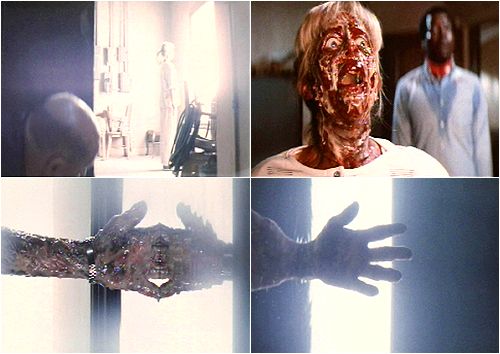
The Divining Screen: This artifact is embedded in the monastery of a holy order. On the wall furthest from the door in the library is a large (3'x4') glass plate mounted to the wall. Before it are two pillars of marble with the hilts of swords, fashioned from steel and wrapped in gold and silver wire, mounted on them. When both hilts are grasped, if the patron deity of the order has a purpose for the individual grasping the hilts its critical point will be revealed to that person as a short, silent series of images in the screen. No one else can see it. Repeated viewing may show changed or different scenes as the world changes the ability, or desirability, of the image.

The purpose revealed need not be a good one. For those hateful to the patron deity the image may be of coming divine retribution or a just end.

Tuesday, October 23, 2018

Back with 17 Answers

I'm back and what better way to celebrate than to give you an idea on what I think OSR means via OSR Guide for the Perplexed

1. One article or blog entry that exemplifies the best of the Old School Renaissance for me:

Taking a Bite Out of the Dungeon.

If there is something that dominated DIY D&D from the first fanzines through the late 80s it was new classes. Matt at Land of Nod is a class factory, but this one to me shows the wild inventiveness of the OSR the best. Still, the Gourmand has a better reason than many to enter the dungeon. He's just hungry.

2. My favorite piece of OSR wisdom/advice/snark:

How I Want to Hear About Your Setting

Zak gives the best explanation of what the old writer's advice "show, don't tell" means in terms of writing game material.

3. Best OSR module/supplement:

Slumbering Ursine Dunes

Speaking of laying out your setting by showing, not telling, Slubmering Ursine Dunes is a great model. It also brings in one of my favorite ideas from the article "Believe It or Not, Fantasy Has Reality" from Dragon #40.

4. My favorite house rule (by someone else):

Party Like It's 999

Carousing is a great rule to explain how gold pieces become experience. Plus, if things go back it makes it a lot easier for the DM to come up with next week's adventure.

5. How I found out about the OSR:

I had been making sure to read James Edward Raggi IV since his series on Big Purple about runing AD&D. Later, I wanted to reference his writing about how to find players, based on the game, and found them on his blog. Through it I found other early OSR blogs. His post Media Influences inspired the first post on this blog.

6. My favorite OSR online resource/toy:

Random Class Advancement System

I don't use it and probably won't any time soon. However, it is full of ideas and does the best thing the OSR does: it makes you think about this game into which you invest so much time and energy.

7. Best place to talk to other OSR gamers:

I would have said G+ of late, but that is ending. I am hoping that between the end of G+ and problems with Facebook and other gated internet communities that the OSR blogs will restart (as I'm looking to do) and grown.

8. Other places I might be found hanging out talking games:

I am not active many places outside my table, but I'm on a few Facebook groups, a couple of MeWe groups, and a couple of Discord servers.

9. My awesome, pithy OSR take nobody appreciates enough:

That memoir is a model for story emerging from RPG play, especially for old school play styles.

10. My favorite non-OSR RPG:

This is hard for two reasons. First, what is the OSR? Is Runequest an OSR game? Traveller? Rolemaster? (my answers are 'maybe', 'hell yes', and 'I think so, but I'm probably in the minority'). Second, I like a lot of games.

In terms of having consumed the most cycles with trying to play it I'm going to say Mage, but I will cheat a little and not say if I mean the Ascension or the Awakening

11. Why I like OSR stuff:

Because it reconnects me with what got me into this hobby in the first place. I don't consider that nostalgia, but more a touchstone. It is similar to why I re-read certain books on a regular basis.

12. Two other cool OSR things you should know about that I haven’t named yet:

The Flailsnails Conventions bring back a type of play I remember from the 70s that seems to have died off.

The Forty Questions: Jeff's Twenty Questions and Brenden's rules follow-up.

13. If I could read but one other RPG blog but my own it would be:

For a variety of reasons I'm going to say Matt's Land of Nod. It has some of the more creative energy and has sustained it for longer than most of us. It also is not as well known as it should be.

14. A game thing I made that I like quite a lot is:

Clockwork Skeletons

15. I'm currently running/playing:

Type IV D&D based on Greyhawk Grognard's ideas about the G/D series with Drow replaced with The Hadal.

As no plan survives contact with the players it has gone way off the rails, but the goblin tribe of which the party is honorary members does supply all the chicken wings and sauce used in taverns in a dwarven city.

16. I don't care whether you use ascending or descending AC because:


I can figure it out. It isn't that hard people.

17. The OSRest picture I could post on short notice:

The place where (for me) it all started:


Monday, October 22, 2012

Monday Pointers 2012-10-22

D4: Xylbocx Starcult
This is some of the best Hawkwind style science fantasy gonzo for D&D I've read in a while.

D6: Short Forms of Place Names in the UK
Sure, there is lots of naming stuff out there, but I like this summary of forms.

D8: Anachronisms
Not only anachronisms but creative ones at that. They are, however, not medieval for the most part. Regardless, I think they represent a classic trope of D&D.

D10: Spears of the Dawn
I'm sure most of my readers have seen it already, but I was a way for a couple of months. Finally, we're getting a Kevin Crawford fantasy game using the Stars Without Numbers take on B/X, something I'd been toying with doing anyway. The best part is he's putting it into the public domain if I read correctly.

D12: Real fighters use bows
Meanwhile RPGPundit is showing off the cover for a game also in the queue for me. If I could change one thing about the above it would be India over Africa for the setting. I've toyed with using India as source before but the richness of it is just daunting.

Monday, August 6, 2012

Monday Pointers August, 6th Edition

D4: Dungeons at Sea
Many dungeons use an abandoned fort as a theme. This list should provide some inspiration.

Wednesday, August 1, 2012

Inspirational Art: Luis Royo


This painting is by Luis Royo and was used as the cover for A Yoke of Magic by Robert Vardeman (which I'm currently reading).
A few quick descriptions from the novel of the riders and their mounts:

The three riders reined in and held their snorting mounts just beyond the ring of pale light cast by Lejena's campfire. Their horses pawed the earth, searing the ground wherever they touched; their hooves were afire.

As she neared, the foremost of the demon riders grasped a longsword forged from crystalline flame. It blazed brilliantly as it slid form a dark scabbard, tiny tongues of fire leaping and dancing along its entire length.

In the light of those hell-fired swords, Davin saw the heavy cowls pulled forward about their heads. No matter which way they turned, their faces - if they had any - remained cloaked in shadow. But the hands gripping those flaming blades were skeletal!

Between the images and the description all I can think is light-sabre wielding Nazgûl.

Tuesday, July 31, 2012

Random Campaign Idea in Pictures

So, lately I've been listening to this:
Which lead to me reading, for the first time, this:
While thinking about running:
Yet at the same time I'd like to run:
Where this:
Has always been associated with:
And I'm really excited to get this soon:

Now, post holocaust after the Martians is nothing new. The Aftermath rules suggest it and a later return of the Martians was the ruin for one of their playtest games (even including the human hunters of men the artillery man envisions). Still, the idea of a devastating Martian war where humanity, but not civilization, is saved by monsters and magicians could be fun.

Base on The World After and this, among others, it's clear I've internalized the D&D is the apocalypse trope. It's also clear that I prefer it not be nuclear war and have a strong bent on the Devil did it (the multiple images above, for those who don't recognize them, are from Prince of Darkness).


Monday, July 30, 2012

Monday Pointers, 2012.07.30/NCurve Edition

D4: Drow I could get behind
Like a lot of people I'm elfed out and looking for alternate types. So, making use of my all time favorite sci-fi bad guys...hell yeah.

D6: Visual Appendix N
Although I'm not a huge fan of movie/TV references to ground a campaign I look at this and think, "Can I play?"

Sunday, July 29, 2012

Playing with History

Influenced by a old Jeff Rients post and prompted because the third has been on my mind today and the second the past week (actually about a week ago, but just finishing the post) here are some pseudo-historically based campaign ideas I've had:

PeriodCampaign IdeaNotesProbable Rules
About 110,000Clark Aston Smith's Hyperborea set in Sangamonian interglacial period GreenlandWhen reading about Greenland due to reading The Tale of Satampra Zeiros I found this map and it's been the primary inspiration.Of all the ideas this is the one most likely to have me drag out AD&D and believe it or not, second edition. Second edition seems like plays much closer to what I've called Intermediate D&D which I played in the early 80s than full blown AD&D. Also, I've never really played second.
871 ADThe Viking conquest of Britain during the reign of Alfred the Great.Having long had an SCA persona who was a pre-Conquest Saxon Although for years he actually bridged the Conquest and went on the Crusades...as I spent time in I got more interested in Anglo-Saxon England. Afred's reign. Bernard Cornwell's The Saxon Stories would be the major literary influence. Lamentations of the Flame Princess for the non-advancing fighter and the very dangerous magic which would be the halmark of the invading Vikings in constrast to the clerics of the Saxons.
late 1400sThe Valley of Mexico just before the Spainish Conquest (and possibly during).This is the most recently inspired, by the pyramids episode of Out of Egypt which I watched on Netflix. I didn't realize that Teotihuacan was not of Aztec origin but in fact predates their culture. That alone sounds like an excellent megadungeon. Plus, Aztec culture, even the poor "I read Wikipedia and a overview book plus watched some TV" cultures that characterize D&D games (even ones based on the Middle Ages or Roman), is alien enough for most of the people who might play in my games to make it interesting.While part of me wants to do straight OD&D with this one I suspect Runequest of some form (I've got 2nd and 3rd edition as well as BRP and GORE on the shelves and I'm open to either Mongoose version, 6th edition, or Open Quest). More than the other three I'd like to use An Echo Resounding with this one. The Valley of Mexico is perfectly sized for it at 3816sq miles. Remember, in Pre-Columbia America there are no beasts of burdern or riding animals so distances will always be driven by foot speed.

Friday, July 6, 2012

RPG Free Association

Matt's excellent Pars Fortuna includes all new spells. Reading them to build a list of 1st level spells for a new game that includes no stock spells I came across Miner's Nose which is described as "This spell grants the target the ability to magically smell precious metals and stones within 30 feet."

I immediately thought of this:


From Comics.org:
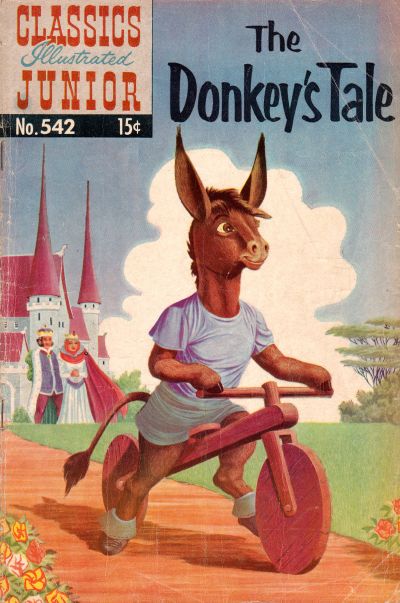
Once upon a time, there was a prince who was born in the shape of a donkey. He was the most beautiful, delightful, lovable little donkey in the world. But he was the saddest little donkey, too, for his greatest wish was to become a real human prince. Though he did not know it, there was one way he could become a human prince. But would he ever find the way?

The reason he was born that way was his father hired a wizard to help the barren queen give birth. When payment came due the king put copper at the bottom of the sacks of gold and the wizard smelled the different. Then the wizard cursed the child.

Outside of Scott at Huge Ruined Pile I don't see a lot of OSR people taking a lot of deliberate inspiration from fairy tales (this particular one is found in Grimm among other places). I don't know if Matt did here, but certainly his spell reminded me of a fairy tale (and wistfully...this particular comic was a favorite as a child).

Perhaps as much as Howard and Lovecraft we need to look at Grimm, Anderson, and Lang.


Monday, July 2, 2012

Monday Pointers, July 2, 2012

D4: Everchanging Book of Names
One of my favorite pieces of GM support software (in fact, one of only two RPG specific programs I use) is the Everchanging Book of Names. I have yet to see any OSR mention of it so I wanted to list it today. You can setup name parts and patterns that fit your world and let it generate away. Several books (sets of parts and patterns) are available include one for Greyhawk as well as other popular settings and literary sources. My favorite is, of course, Glorantha.

D6: Detailed Hexcrawl Rules
Justin has an interesting series of rules for running hexcrawls designed to keep the hexes behind the screen while players react to the environment.

D8: System Matters in the Sandbox
Ravencrowking has a multi-part discussion of why system aspects are needed for a sandbox to work. That he concludes the system in D&D 3.x and Type IV aren't conductive to sandbox play isn't a surprise. What I do find interesting is his conclusion on what currently available game beats out any version of D&D or retroclone for this position. By the reasoning he gives a retro-clone plus An Echo Resounding and Adventurer, Conqueror, King would meet the "best of show" standard as well.

D10: Nine Minute Campaign Design
Another one of those quick questions to get your setting down post that I've found useful.

D12: Crowd Funding by the Ton
Lamentations of the Flame Princess is trying to crowd fund 19 separate adventures. There are bundle options where you can get all that fund for much less than buying print plus pdf for each individually. If you are a Pembrooktonshire Gardening Society there are discounts on the bundles. It is Indiegogo, not Kickstarter, which means you pay upfront and get refunded if they don't fund. Given my two favorite OSR companies (LotFP and Sine Nomine) are effectively teaming up in it I'm most interested in seeing The House of Bone and Amber by Kevin Crawford (of Stars Without Number and Red Tide fame as well as the afore mentioned An Echo Resounding) although I'll be buying the bundle.

D20: Magical Pacts and Worshipful Machines
Speaking of Kevin Crawford we now have small free releases for Red Tide and Stars without Number.

Friday, June 29, 2012

Monster lists and the Sapir–Whorf hypothesis

So, Delta put up an interesting analysis of the LBB monster list, Original Monster Elegance. One of the things he noticed was the creatures were grouped by type and ordered, within type, by hit dice. You had humanoid types from half hit dice (kobolds) to 12 hit dice (giants). Similarly you had undead from half hit dice (skeletons) to 9 (vampires). In both cases the top monster had a variable range (8 to 12 for giants and 7-9 for vamps). After that you get, in Delta's words, a block of chimerical and serpent-like monstrosities, culminating with dragons, purple worms, and (on the flip) sea monsters.

Lately, I've been looking at the very common OSR idea of campaign unique monsters and spells. I wondered, what if you took the LBB groups and did the same thing uniquely. A group of humanoid monsters, a group of undead, and a group of...well, what do you call them, monster monsters.

There is this linguistic theory called linguistic relativity. Read the Wikipedia article for the detailed and not screwed up by me defition. I first heard of it as the Sapif-Whorf hypothesis in a Heinlein story (Gulf if memory serves). I've always understood it as "the words you have influence what you can think about" but Wikipedia tells me it's more complex than that. However, I think there is a kernal of truth.

See, when I was coming up with my three basic groups I was looking for a word to describe what Delta called "a block of chimerical and serpent-like monstrosities". Then, one hit me. I wrote down kaiju. At that moment, as silly as it might sound, just choosing the word to define the group of non-humanoid, non-undead monsters put it into focus. I immediately started thinking not only of Godzilla but Rodan and Gamera.

Maybe, in the end, the monsters won't end up that different. After all, they'll still be based on real animals in some way. I certainly don't want to create some "Japanese" setting. To be honest, if I wanted to use Japanese media as a primary inspiration it's more likely to be for a space fantasy game using Message from Space, The War in Space, Atragon, and so on. However, I do think choosing that word got me out of what I'll call the D&D mindset, the whole Elfy/Dwarfy thing.

Tuesday, June 26, 2012

Your Cleric is an Initiate

Most D&D style settings have a polytheistic religion that is simply either:

  1. An overly simplified Catholicism with the various deities being similar to saints.
  2. A modern mix of individual churches similar to Protestantism in the US.
I think we're missing a real opportunity.  While the first model is probably close enough to the state polytheistic faiths in the ancient and Classical worlds for the general faith of the people I think it misses the boat with clerics.

In the Classical world there were a series of religions variously known as mystery cults, mystery religions, or just mysteries.  Enough is known on two to even result in cult specific articles on Wikipedia: the Eleusinian Mysteries and the Mithraic Mysteries.  In fact, I wrote up a "race as class" version of Mithras a couple of years ago.

These cults were highly secretive and consisted of levels of initiation. The closest analog today is probably Masonic and similar orders as well as groups like The Golden Dawn. Based on that you might consider mystery cults to be more appropriate to magic-users.  While both groups are occult organizations the modern groups rely on intellectual understanding of the universe being increased instead of a divine revelation.  Both fit well in a campaign.

"But Herb," I hear you say, "how does this differ for being a follower of the god Foo in traditional D&D terms."  The biggest changes are social although some powers issues come up.  In the traditional D&D world your know that Foo's worshiper are healers so that's the temple you go to for healing.  With mystery cults you don't know much if anything about the faith including what powers they bestow or where to find a high priest of Foo or even the site of Foo worship.  In fact, even a PC cleric who is a member of Foo's mystery cult won't necessarily know the powers of those above him especially those significantly above him.  Thus, the indulgence system of gaining clerical favors (go to the temple and make a donation) is replaced with a series of investigations, favors traded, and possibly initiation for PCs.  Remember, much of the cult knowledge is secret and cannot be taught or shared.  This has ramifications for PCs (see below).

In terms of powers the customization would be similar in some ways to AD&D2 but different in others.  Instead of assigning schools to a given cult I would recommend drawing up several circles of initiation.  Each circle could consist of a mix of myths, symbols, titles, and spells becoming available as well as qualifications.  While certainly a level component should be part of a circle change other activities, such as quests or ritual combat similar to the Druid, the Monk, or the Paladin regaining status could be included at the higher levels.

One important idea is don't have the spells map to 2nd edition and later domains.  Mystery cults don't map well to normal deities of the "sun god", "rain god", "war god" style.  They are much closer to early conceptions of cults in Runequest.

The other important idea is secrecy.  Sure, your third circle cleric of the Foo mysteries recognizes that symbol as the sign of Bar from the myths of the Snafu over the wedding feast but you can't communicate those details to the party with risking a religious violation.

To give an example of circles, tomorrow I present my Initiate of Mithras as rules for a cleric.


Monday, June 4, 2012

Monday Pointers, 2012-06-04

D4: In Praise of the Comics Code
While I don't 100% agree with Eric about DC (which may be due to my love being The Legion of Superheroes instead of other groups) I think he has a point. Four color heroes are a meme for a reason and in abandoning that completely the supers have become less. Watchman was supposed to be a deconstruction not an inspriation. In a related note, my recent Lulu order included a print copy of Mystery Men.

D6: Several Cities in Time
Ckutalik is exploring building an underworld built of ruined cities under the current one in his setting. Not only is this an interesting idea, but very historical. In fact, although Pillagers of Troy was originally conceived as a Pavis/Big Rubble type set-up this might work better.

D8: Mother Goose is My Dungeon Master
There is this great bit in the series Sports Night where several characters wish they could have more good ideas. A lot of my fellow bloggers make me feel the same way.

D10: For the Ultimate Rules Lawyer
While the idea of building a game's rules from a blank page up via common law is a bit much in my experience most groups run by common law. For one, very few groups are single GM, single campaign all the time in my experience dating back to the late 70s. While by the 80s the "playing my character in Jim's campaign" style has been replaced by "this is my character in Jim's campaign" style it was still rotating GMs. Groups had common law that they used in all their games. You even had the legal factor of knowing a given judge's style affect how you played.

Thursday, May 31, 2012

Unispirations

It's common for people to list the inspirations for their campaigns, but do you have uninspirations?

For example, The World After and it's earlier version City States of the Apocalypse had H. P. Lovecraft as an uninspiration. Although I do enjoy his writing I think he's overdone. One of his key ideas, humanity is insignificant on a cosmic scale, is completely opposite a key portion of both campaigns. In both, humanity, but it's own will, broke the entire cosmos.

It seems many, many gamers want to have Tolkien as an uninspiration but their results are mixed.

So, what are your uninspirations?

Wednesday, May 30, 2012

Further Notes to Myself for Yellow Book D&D

Expanding on my Chinese menu D&D (for those old enough to remember Chinese menus in that form):

Also take:
Holmes: five form alignment
ACKS: spell formula versus spell repertoire plus free casting from repertoire
Neoclassical Geek Revival: Level breakpoint achievement requirement, especially at level 15 and beyond.

Actually, how many people ever really get to level 36 in BECMI/RC or level 20 in AD&D. I know D&D3 was designed to get to level 20 in something like 18 months (which WotC found was normal time to reboot). I would think a similar philosophy was in effect with Type IV's 30 levels.

Still, assuming bi-weekly play over two years is 52 sessions or going up a level about every 4 sessions for 14th level (13 level increases). Assuming two weeks out of three (about my adult experience) it's 72 sessions or just under a level every 5. Even a very optimistic three out of four only gets 77 or a level every 5.5 sessions. That's assuming no character death.

Do we really need anything beyond BX or LL/AD&D with 14 and 20 level limits respectively.

D&D Next Characters

I haven't played or even finished reading through the playtest materials, but a quick glance at the Race:Class:Background:Theme system with just what's provided there are 400 potential combinations in the playtest.

Is anyone else trying to generate characters?

Also, why play a human? Is this something we'll see later? Should we be surprised that only one of five sample characters is human?