Well, I run to the rock just to hide my face
And the rocks cried out, no hiding place
There’s no hiding place down here
It seems MeToo came to the OSR earlier this year. Zak Sabbath, of Playing D&D With Porn Stars fame was outed as a serial abuser. The outing, by his former partner, is chock-full of abusive goodness up to, and including, grooming of new victims and forcing one victim to sign a defense of Zak. It is ugly stuff.
I will not claim I knew it was true all along. I swallowed the defenses of Zak, especially the letter I referenced above. I will claim I’m not surprised. Zak was an asshole online. People can be asses behind a keyboard and different in person. However, it is a good bet they aren’t. Still, I thought Zak was an ass at worst. I had given up discussing things online with him years ago, but still followed his work because I thought he did creative and interesting things with Old School D&D.
I am at least a month behind the times discussing this. I originally posted this at my personal and writing blog because gaming is not the real point. I decided to cross post it because it is OSR related in part. I have also included Joesky Tax.
When popular artists have committed unspeakable crimes, there is confusion on what to do. Do we buy new works from them? Do publishers still hire them? I doubt Zak will publish again in the RPG world. Do we keep reading their works? Do we keep the items we have? Each is an interesting questions. but not the subject now. I want to look at something tangential.
Do we hide our prior associations with the artist?
Zak appeared as a consultant in the credits to the fifth edition of D&D. New printings will have no consultants credited. Many people in the OSR have scrubbed links not just to his blog on blog rolls, but individual links in their own posts using his ideas. While the former is much closer, in my mind, to the prior publishing question the latter is an attempt to hide.
This attempt to hide isn’t unique to RPGs. In the past few weeks an episode of The Simpsons featuring just the voice of Michael Jackson has been removed from circulation after Leaving Neverland appeared. Grandest of all has been the declaration Penn State won no football games for 13 years . Penn State won 112 including two Big Ten titles. The declaration was a punishment for the child sexual abuse by one of the assistant coaches and the athletic department’s cover up of the abuse.
The claim is these actions are a punishment for abuse. That, however, does not wash. Wizards of the Coast paid Zak for his consulting, archives on the Internet will show discussions of it, and thousands, if not tens of thousands, of books still have the credits. Michael Jackson was paid for his time. Even if the producers could claw the money back, he is now beyond our ability to punish. The Penn State team has already won the games and received the donations and other income they generated.
We may punish people whose degree of guilt in these matters is an open question. Did the players who actually played football in Penn State’s national championship year have anything to do with the abuse? I doubt any did and will state without reservation at least one player did not. Those players’ achievement have been memory holed as thoroughly as any adverse fact in Airstrip One. It is possible there was someone who worked on the “Stark Raving Dad” episode of The Simpsons who has no other credit on the show. The producers’ actions hide the work of such a person.
Ff we are not punishing the perpetrators and punishing the innocent, why do it? Why do we unperson Zak or Michael or Jerry Sandusky?
The wicked flee when no man pursueth: but the righteous are bold as a lion. - Proverbs 28:1
We do it to hide. We do it to hide the fact we didn’t see the warning signs. We do it to hide the fact we believed the defense. We do because we are afraid we let a football championship or a fantastic pop song or, in the case at hand, a cool set of rules on how to play D&D become more valuable than making sure others are treated with decency.
These fears are unreasonable are most people. We knew Zak from his blog, his video show, and arguing with him online. Knowing he was an acerbic SOB in blog comments is a long way from suspecting the defenses against accusations of abuse were coerced. The lack of suspicion is part of why we fell for the excuses and defenses. It is part of why we feel guilty now. We cannot imagine doing it ourselves. As a result we have a hard time imagining someone else, especially someone whose work we value, doing it.
Still the guilt is real. We think we should have known. We think we should have seen it as clearly as the gamers who called Sydney police when MrDeadMoth assaulted his wife while livestreaming.
I have not sought anyplace I linked to Zak or discussed his ideas. The fact is I thought they were good ideas. I will not be happy when people ask, “Why do you link to that abuser?”. Deleting them now will not change my making them in the past. Even if other do not know I made the links, I will know.
We try to hide, but as the rock cried out, there is no hiding place. We celebrated his ideas even as we excused his being an ass. However, that is all we knew. That is all we are complicit in. Quoting or publishing Zak in the future is a choice we can make. Quoting him in the past is a choice we made. We cannot, and should not, hide from it.
Joesky Tax:
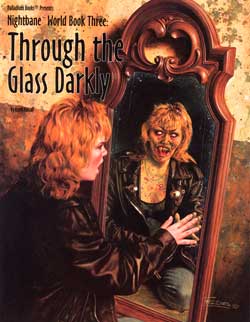
The Divining Screen: This artifact is embedded in the monastery of a holy order. On the wall furthest from the door in the library is a large (3'x4') glass plate mounted to the wall. Before it are two pillars of marble with the hilts of swords, fashioned from steel and wrapped in gold and silver wire, mounted on them. When both hilts are grasped, if the patron deity of the order has a purpose for the individual grasping the hilts its critical point will be revealed to that person as a short, silent series of images in the screen. No one else can see it. Repeated viewing may show changed or different scenes as the world changes the ability, or desirability, of the image.The purpose revealed need not be a good one. For those hateful to the patron deity the image may be of coming divine retribution or a just end.


 by Robert Vardeman (which I'm currently reading).